Acrylic roof coatings for Nashville commercial roofs
You want a lower-cost coating on a roof that still drains, and you want it to cure before the next front moves through. We apply acrylic where it works and say so plainly where it does not.
- Drainage checked first
- Cure window planned
- Answered 24/7
Short answer
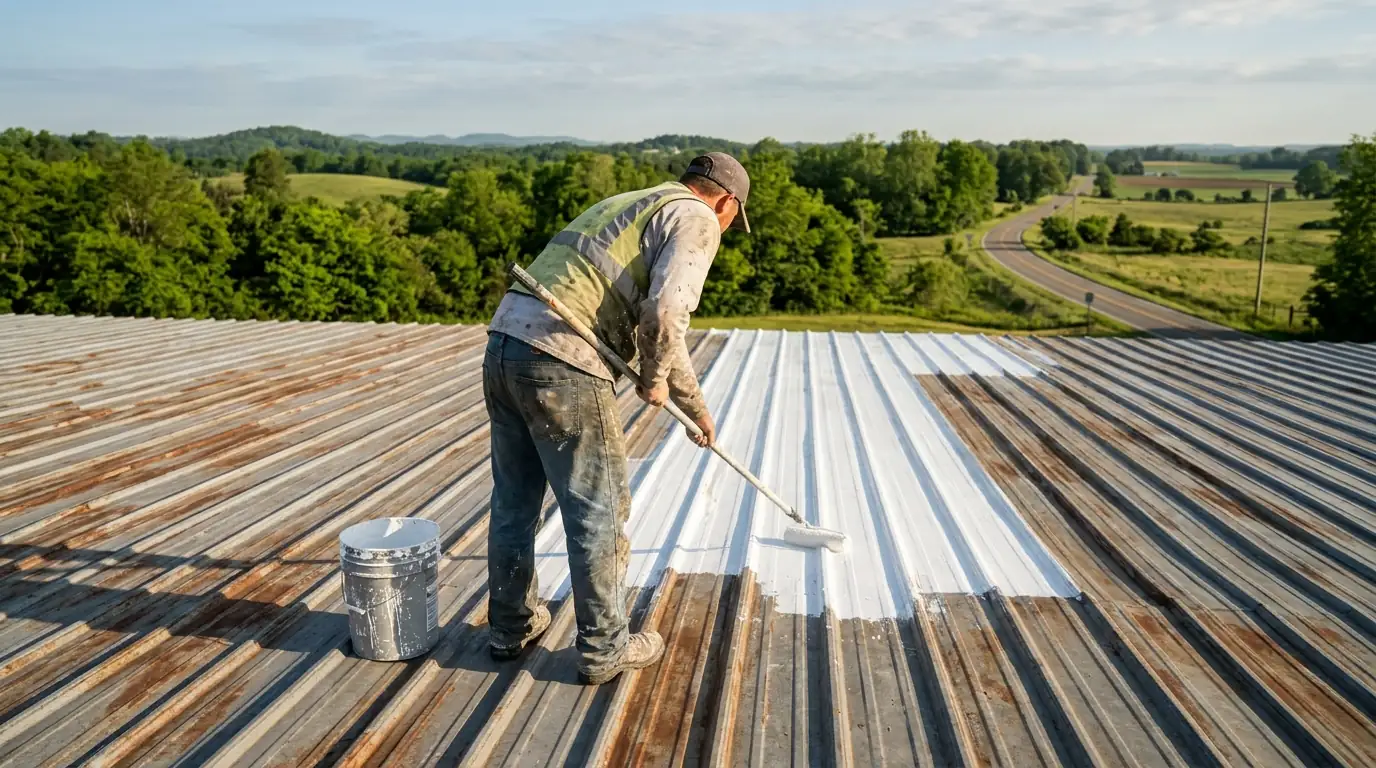
Acrylic roof coating is a water-based, fluid-applied coating that costs less than silicone and works well on metal, spray foam and sound single-ply roofs that drain properly. It does not tolerate ponding water, and it needs dry, warm weather to cure. In Nashville, that points to spring and early fall for most commercial projects.
Where acrylic is the right call, and where it is not
Acrylic is the workhorse coating for roofs that shed water. It is water-based, easy to apply, bonds to a wide range of substrates and costs less than silicone. On a corrugated metal warehouse in Lebanon, a spray foam roof on a clubhouse in Smyrna or a sound white TPO on an office building in Franklin, acrylic often gives the best return per dollar spent. Property managers who carry a long list of small buildings tend to like it for the simple reason that a crew can coat several roofs in a week.
Its limit is water. Acrylic is a water-based film and standing water softens it, causes blistering and eventually washes the film out. If a roof holds puddles for more than a day or so, acrylic is the wrong choice unless we first fix the drainage with tapered insulation, added drains or a scupper. Positive drainage, meaning water leaves the roof within about two days of rain, is the entry requirement. We confirm drainage with a hose test or a look after the next rain.
Acrylic also gives you flexibility down the road. It can be recoated with another acrylic coat when the film wears, and in many cases it can be topped with silicone. That makes it a sensible first coating for an owner who might want a different system later. We explain which options stay open before we pick the product. Foot traffic matters too, since acrylic scuffs on walkways unless we add protection pads.
Roofs that suit an acrylic coating
If your building matches several of these, acrylic is likely worth pricing.
Bare or rusting corrugated metal
Acrylic bonds well to cleaned and primed metal and reflects heat off an uninsulated shell. Think barns, shops and older industrial sheds. Where panels are badly pitted, we say so and price replacement panels.
Aging spray foam with a worn coat
Closed-cell SPF needs a UV-resistant coating to survive. When the original topcoat chalks, acrylic is a standard renewal. Foam that has gone soft or taken on water is a repair first, then a coating.
Sound TPO or PVC with a faded surface
If seams hold and the membrane is dry, a fresh reflective coat can extend life without a tear-off. A cleaning and an adhesion patch tell us if the surface will take the coat.
Sloped roofs that shed water in hours
A roof with a real pitch, such as a church sanctuary or a hip-roof clubhouse, gives acrylic the drainage it needs. Steeper pitch also means rain leaves faster, which shortens the cure risk.
Tight budgets with a short horizon
A building due for redevelopment or sale can often use a lower-cost coating for the holding period. We are honest that a cheaper coat means fewer years of added life.
Hot top floors under dark roofs
A white acrylic can lower surface temperature on a roof over a lease space that complains about summer heat. Savings depend on the insulation under that roof, so we do not promise a number.
Cure temperatures and the Nashville calendar
Acrylic cures as its water evaporates. That means it needs a warm, dry surface and decent air movement, and it needs enough time before the next rain. Manufacturers set minimum surface and air temperatures, usually around the fifties and rising, and call for no rain for a day or more. Always check the data sheet for the exact product. Humidity slows drying, so a humid 70-degree day cures slower than a dry one.
In Middle Tennessee, that points to late April through June and September into October. July and August are hot enough for fast cure, but afternoon thunderstorms are common and a sudden shower on uncured acrylic washes it right off the roof. November through March brings cold nights, heavy dew and surface temperatures that fall below the limit by evening. Fall is often the best window, because mornings are dry and the thunderstorm risk drops.
We schedule acrylic around a seven-day forecast, start in the morning once the surface dries, and stop early if radar shows cells building. It is slower than silicone because of those limits. A project may take more calendar days than labor days, and we tell you that in the scope. Some products are rain-ready sooner than others, and we pick with that in mind.
How we prepare and apply acrylic
Acrylic is forgiving about surfaces, but it still fails if prep is rushed.
Check drainage and ponding
We note every low area, mark it and decide whether to fix drainage first. Acrylic goes on only where water will leave. Water that stays is a different project.
Repair and rust treat
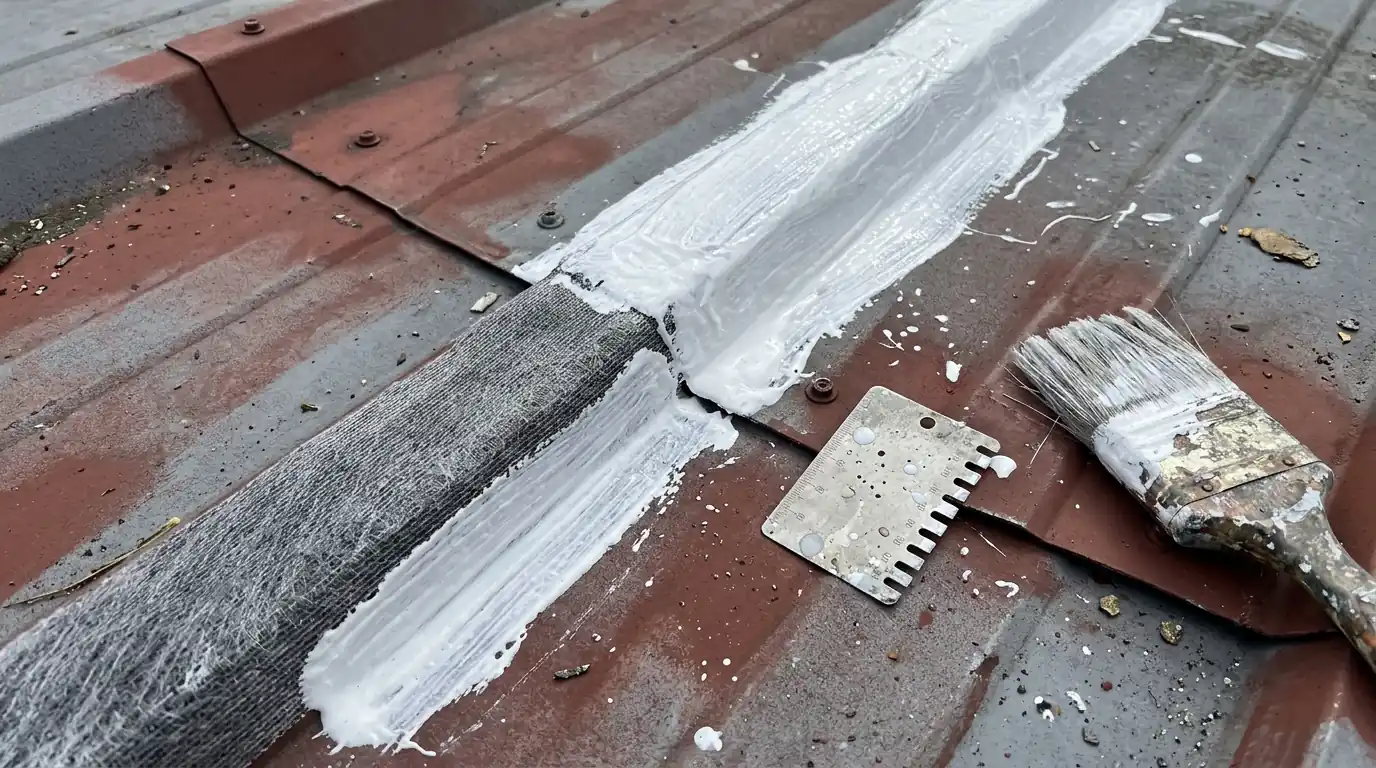
Loose fasteners are replaced, open seams sealed, and rusted metal is wire brushed and primed with a rust-inhibiting primer. Rust left under coating keeps growing and lifts the film.
Wash and dry the surface
A pressure wash and a full day of drying, or longer in damp weather, gives a clean substrate and reliable adhesion. Skipping drying time is the most common cause of early peeling.
Reinforce the details
Fabric and a heavier coat go over laps, curbs, pipe penetrations and corners, where movement tears thin films. We use the reinforcing fabric the manufacturer lists for that product.
Apply base coat and topcoat
Two coats go on with a day between them when the weather allows, with wet-film thickness checked against the data sheet. Skipped coats show up as chalking and thin spots in a year or two.
Watch the first 24 hours
We leave once the coat is rain-ready, check the forecast and tell you which hours matter. Any wash-off gets touched up.
Acrylic compared with silicone and urethane
Each coating has a job. This shows what acrylic gives you and what it does not. Think about drainage and your future plans before you think about price.
| Acrylic | Silicone or urethane | |
|---|---|---|
| Cost per sq ft | Lowest of the common coatings | Higher; silicone usually costs the most |
| Standing water | Not tolerated; needs positive drainage | Silicone tolerates ponding; urethane is mixed |
| Application window | Needs warm, dry days and a quiet forecast | Silicone is more forgiving of humid mornings |
| Foot traffic and abrasion | Moderate; can scuff on busy walkways | Urethane resists abrasion well |
| Recoat flexibility | Can be recoated with acrylic and often silicone | Silicone limits future coatings to silicone |
What acrylic coatings cost in Nashville
Prices are for typical commercial work with sound substrates. We quote after we see the roof, because repairs vary a great deal. Prices change with the amount of repair work before the first coat.
| Work | Typical range | What moves it |
|---|---|---|
| Acrylic over cleaned corrugated metal with primer | $1.74 to $3.08 per sq ft | Includes rust treatment and fastener sealing. |
| Acrylic over sound single-ply TPO or PVC | $1.68 to $2.86 per sq ft | Needs cleaning and a verified adhesion test. |
| Acrylic topcoat on spray foam | $1.92 to $3.34 per sq ft | Includes patching of divots and cracks in the foam. |
| Drainage corrections before coating | $3.75 to $7.40 per sq ft of affected area | Tapered crickets or added drains where water stands. |
What pushes a price up or down:
- Number of coats and wet-film thickness required for the warranty
- Roof size and the number of separate sections or levels
- Amount of rust or foam repair to do before the first coat
- How many calendar days weather costs us during the cure window
- Access, including steep pitch, fall protection and crane needs
Ranges reflect recent Middle Tennessee work and are not a quote; we price after a site visit. See the full Budget Guide.
Questions to settle before an acrylic coat goes on
This list keeps the project on track and keeps the warranty intact.
- Does water leave the roof within two days of rain, or does it stand in low spots?
- Is the insulation dry, confirmed by cuts or a scan?
- What is the manufacturer minimum surface temperature for this product?
- How many dry days does the forecast show after application?
- Is the substrate metal, foam or single-ply, and is it primed correctly?
- Who is responsible for touch-up if rain hits the fresh coat?
- What thickness does the warranty require, in wet and dry mils?
- Will you want silicone on this roof later?
A shower the afternoon after coating is not a disaster
Most acrylics set to a rain-resistant film in a few hours of good drying weather. If a front arrives early on a spring day, the first coat can still wash back at edges or low spots. We keep material on site, stage patches around the roof and touch up the next morning once the roof dries. The key is never to coat when the forecast shows rain within the cure period. We would rather move a crew than redo a roof. Dew is the second concern, which is why we start once the surface is dry.
Need acrylic roof coatings on a Nashville building?
Call (615) 716-3057 any hour. We look at the roof, show you what we found and price the work before anything starts.
Where we do acrylic roof coatings around Nashville
The ZIP codes below cover most of the buildings we work on. Every one links to its local page, and the full locations list has 62 more.
- Nashville 37219
- Downtown Nashville 37219
- East Nashville 37206
- Antioch 37013
- Madison 37115
- Donelson 37214
- Hermitage 37076
- Bellevue 37221
- Green Hills 37215
- Franklin 37064
- Brentwood 37027
- Murfreesboro 37130
- Smyrna 37167
- La Vergne 37086
- Mount Juliet 37122
- Lebanon 37087
- Hendersonville 37075
- Gallatin 37066
- Spring Hill 37174
- Columbia 38401
- Goodlettsville 37072
Work that often goes with acrylic roof coatings
We install and repair systems from Carlisle SynTec, GAF, Johns Manville and Sika Sarnafil, and we patch whatever is already on your roof.
Acrylic Roof Coatings questions from Nashville owners
Can acrylic roof coating be applied over metal roofing in Nashville?
Yes, and metal is one of its best uses. We wire brush rust, prime bare steel, seal fasteners and laps, then apply two coats. We pick a rust-inhibiting primer for the metal type. Standing seam and corrugated panels each need slightly different detail work.
What temperature does acrylic need to cure around Nashville?
Most acrylic coatings need surface and air temperatures above roughly fifty degrees and rising, with no rain for a day or more. Each product has its own limits on the data sheet. In practice, that means April to June and September to October for most commercial jobs.
Why does acrylic roof coating fail where water ponds?
Acrylic is a water-based film. Standing water softens it, causes blisters and washes pigment and binder out over time. That is why we check drainage first and correct low spots or choose silicone for roofs that hold water for more than a day or two.
Can I put silicone over acrylic coating later?
Often yes, after a thorough cleaning and an adhesion test. Acrylic is more flexible about future coats than silicone is. The reverse does not work, because acrylic will not bond to cured silicone. Ask us before you decide on a long-term plan.
How many coats of acrylic does a commercial roof need?
Most systems use a base coat and a topcoat, with fabric at seams and details. Total thickness is set by the manufacturer and the warranty, and we measure wet film at several points as we go. A roof in poor shape may need an extra coat in the worst areas.