Apartment, condo and HOA roofing in Nashville
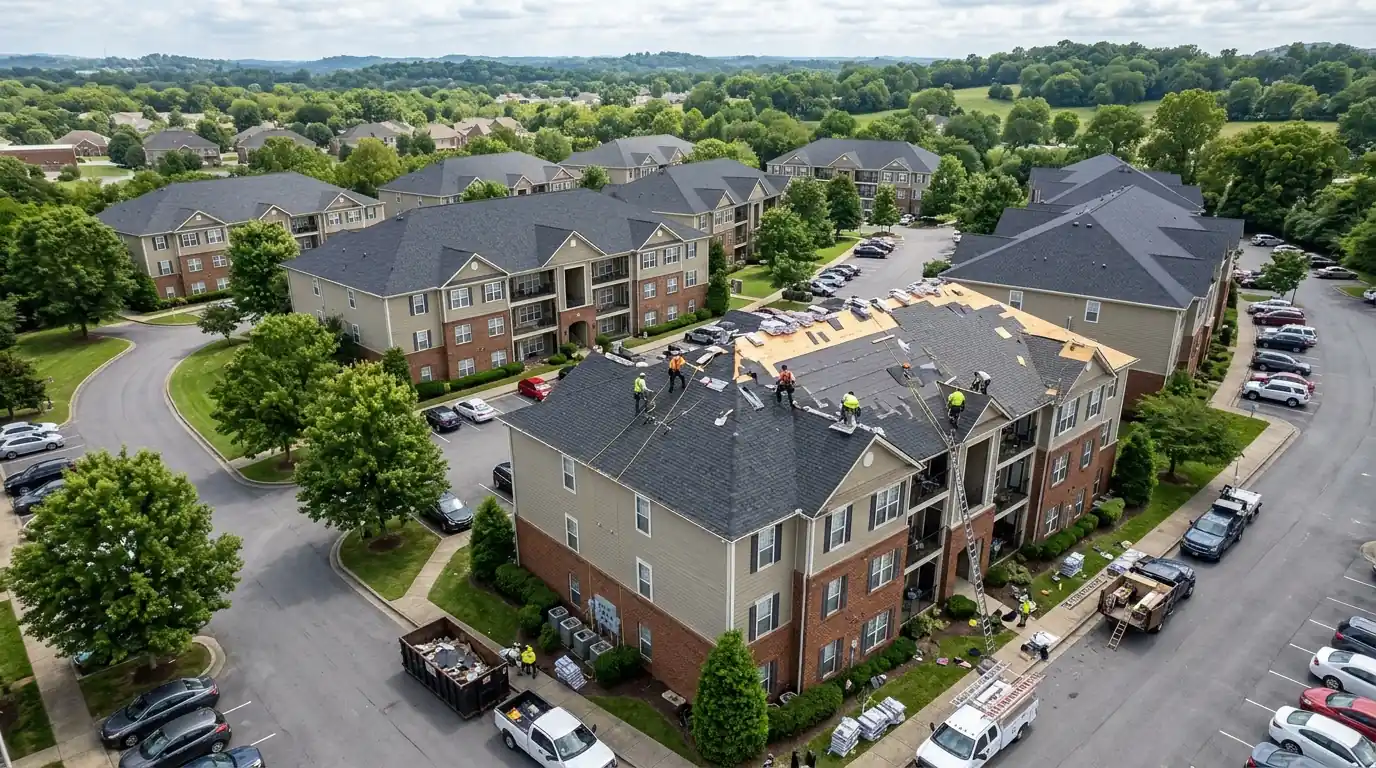
Roofing a twelve-building complex means board votes, resident notices and mixed roof types in one budget. We phase the work building by building and keep the board, the manager and the residents informed.
- Phased by building
- Resident notices
- Answered 24/7
Short answer
Apartment, condo and HOA roofing is the repair or replacement of roofs across multi-building residential properties, usually phased over one or more seasons. Commercial-grade shingle runs $4.15 to $6.90 per sq ft installed and flat sections $7.15 to $11.80. We quote after a site visit and a walk with the manager or board.
A complex is a portfolio, and the roof plan should treat it like one
A garden-style apartment community in Antioch, a condo association in Green Hills or an HOA in Brentwood rarely has a single roof. It has many, built at different times, often with different shingles, flat decks over balconies and low-slope sections over entries and breezeways. Each building ages at its own pace, and the board needs a plan, not a string of emergency repairs. Walking the property with the manager first often shows that two or three buildings account for most of the leak calls.
We begin with a condition survey of every building. Each roof gets a rating, a photo set and a rough remaining life. That lets the board see which buildings need work now, which can be repaired and which can wait. The survey becomes the basis for a multi-year schedule that spreads cost without leaving a building exposed. A survey also gives the board a fair way to explain why one building goes first.
Because decisions here are made by committees, documentation matters. We provide scopes, drawings and unit-price sheets in a form a board can compare. When members ask why one building costs more than another, the answer is on paper: a rotted deck, a second layer to tear off or a fall hazard at a roof edge. Boards that ask for a clear price per building find votes go faster, because members can see exactly what each building costs.
Reserve studies drive many of these decisions. A reserve study estimates when each roof will need replacement and how much the association should set aside each year. Our condition survey gives the study's author real data: actual remaining life, actual defects and actual unit prices. Boards that update their reserve numbers with field findings avoid the surprise assessments that anger owners and strain relationships.
Signs a residential complex is overdue for roof work
Residents notice leaks before managers do. These patterns show up in work orders and on walks.
Top-floor unit complaints cluster by building
When work orders concentrate on one building or one end, the roof there is the cause, not individual units. Look at the work order log for the past two winters, not just the past month.
Granules in gutters and at downspouts
Shingles that shed granules are near the end of their wear layer and will leak sooner than they look.
Curling or cupping shingles
Edges that lift catch wind and tear off in the next storm. Hail seasons make this worse.
Balcony and breezeway ceiling stains
Flat sections over common areas often leak at drains and wall terminations.
Repeated patching on the same ridge or valley
A building that needs patching every spring is a candidate for replacement, not another repair.
Insurance letters about roof age
Carriers increasingly ask for roof condition reports, and some raise premiums or restrict coverage on older roofs.
Hail dents in vents and metal flashing
Dimpled soft metal after a spring storm means the shingles beneath may be bruised even if no leak has appeared yet.
Repair now, phase replacements, or replace everything at once
Boards usually choose among three strategies. Each has different cost timing and risk. Interest rates, reserve balances and insurance requirements often decide the choice more than roof condition.
| Phase by building over several years | Replace all roofs in one project | |
|---|---|---|
| Cash flow | Spread across budget years, easier to reserve for | Large single outlay, often needs a loan or assessment |
| Price per sq ft | May rise slightly with material price changes | Volume pricing, locked in |
| Resident disruption | Lower at any one time, longer overall | Concentrated, but finished sooner |
| Matching appearance | Buildings differ in age for a while | Uniform look across the property |
| Risk | Older buildings keep leaking until their turn | Weather delay affects many buildings at once |
| Insurance and lender comfort | Shows a funded, documented plan | Shows a completed project and a clean condition record |
How we phase a multi-building roofing project
These steps apply whether the complex has six buildings or sixty.
Survey and rank every roof
We walk each building, record roof type, age, slope, drainage and visible damage, and rank them by urgency. A short photo log helps the board explain priorities to owners at the annual meeting.
Present options to the board
A written scope with unit prices and a phasing proposal is prepared for the manager and board. We attend meetings when asked.
Plan staging and parking
We agree on dumpster locations, material drop zones and parking that keeps fire lanes clear and resident cars safe.
Give residents written notice
Door notices go out with dates, noise windows and contacts at least a week before work starts at each building. A copy goes to the office, and signs go up in each stairwell.
Roof building by building
Each building is completed before the next begins. Flat and shingle sections are done together to keep one crew's work on one structure.
Inspect and hand over
We walk each finished roof with the manager, photograph it and log the details for the reserve study.
Close out with a warranty file
Each building gets a record of materials, fastener patterns and dates, so the board has proof for the manufacturer warranty and for the next reserve study.
Mixed roofs: shingle fields, flat balconies and low-slope connectors
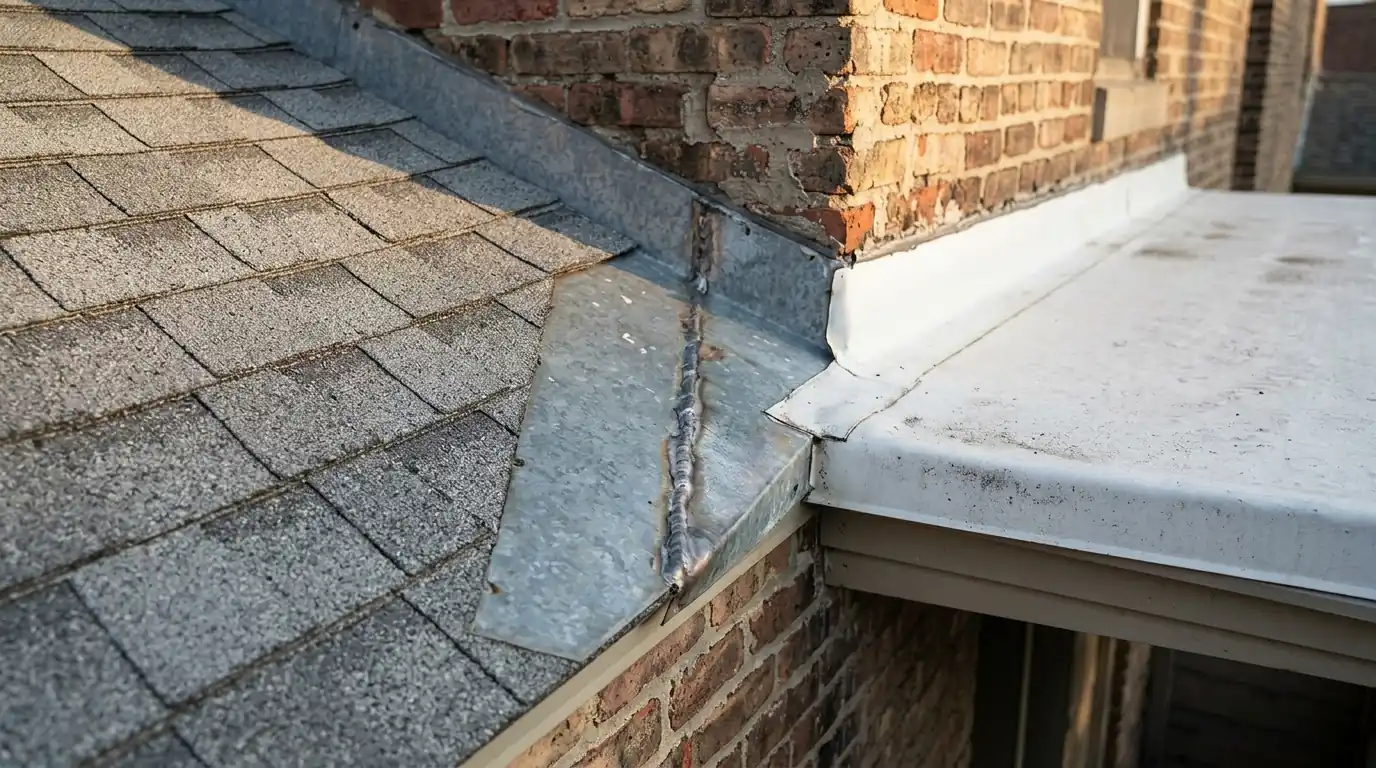
Most multifamily properties combine at least two roof types. Steep-slope shingles cover most of the area, while flat or low-slope membranes cover porches, link corridors and mechanical rooms. Treating them as one roof system causes leaks at the transitions, where a shingle valley dumps water onto a flat membrane that was never designed for that volume. Where building codes limit roofs to two coverings, we count the layers before choosing a recover or a full tear-off.
Commercial-grade architectural shingles are common on multifamily roofs because they combine wind ratings with a lower cost than metal. Where a building has a low slope below the shingle minimum, we use TPO or modified bitumen, and we flash the transitions with metal or welded membrane so the two systems meet cleanly. Shingles on the main slopes should come off in sections that can be dried in the same day, so residents are never under an open roof overnight.
Balconies and walkways add another layer. Waterproofing decks over living spaces is a roofing problem, and we handle it with coatings or membranes with proper drainage. We coordinate with the property's painter, siding contractor and gutter crew when scopes overlap, so the work happens in sequence and nothing gets damaged. Residents who work from home appreciate advance notice of noisy hours.
Safety on occupied residential grounds deserves care. Children, pets and balcony furniture are all close to a work zone. We fence the area under the roof edge, keep ladders and material off walkways overnight and ask the manager to move cars away from the building before tear-off. A short walk through the property with the crew foreman each morning keeps everything in order.
What apartment, condo and HOA roofing costs
Prices below are typical for Middle Tennessee complexes. Roof pitch, tear-off layers and phasing change them, and we quote after a site visit. Per-building pricing is listed separately so the board can compare buildings fairly.
| Work | Typical range | What moves it |
|---|---|---|
| Architectural shingle replacement, steep slope | $4.15 to $6.90 per sq ft | Includes underlayment, ice barrier at eaves and ridge vent |
| Low-slope TPO over breezeway or balcony roof | $7.15 to $11.80 per sq ft | Clean deck, mechanically attached or adhered |
| Balcony deck waterproofing coating | $5.60 to $10.25 per sq ft | Includes crack repair and traffic coating |
| Condition survey for one building | $1,150.00 to $3,640.00 per building | Depends on size and number of roof types |
| Roof edge drip and gutter hanger replacement | $6.80 to $13.70 per linear foot | Often done with a reroof to save a second mobilization |
What pushes a price up or down:
- Number of buildings and total roof area across the property
- Roof pitch and number of stories, which affect safety setup
- Layers of existing roofing that must be torn off
- Condition of the plywood or deck and number of replaced sheets
- Resident protection, such as balcony covers and parking restrictions
- Phasing, which adds mobilizations but can reduce disruption
Ranges reflect recent Middle Tennessee work and are not a quote; we price after a site visit. See the full Budget Guide.
Documents a board or manager should have ready
Bring these to the first walk and the decision process goes faster.
- Site plan with building numbers and unit counts
- Past roof invoices, warranties and insurance claims
- Current reserve study and planned roofing budget
- Insurance carrier requirements for roof age and type
- HOA architectural rules for shingle color and style
- Resident notification procedures and emergency contacts
- Which buildings share a common attic or firewall
- Existing solar panels, satellite dishes or antennas on the roofs
- Any open claims involving past roof work
Hail and tornado history matter to insurers
After the March 3, 2020 tornado and the December 9, 2023 storm in Madison and Hendersonville, carriers across Middle Tennessee have looked harder at roof age on multifamily properties. A documented condition report and a funded replacement plan can help a board negotiate coverage. We write reports in a format that insurers and lenders accept, with photos, ratings and remaining-life estimates. That documentation also helps when you apply for a loan or refinance, because lenders ask about roof age.
Need apartment, condo & hoa roofing on a Nashville building?
Call (615) 716-3057 any hour. We look at the roof, show you what we found and price the work before anything starts.
Where we do apartment, condo & hoa roofing around Nashville
The ZIP codes below cover most of the buildings we work on. Every one links to its local page, and the full locations list has 62 more.
- Nashville 37219
- Downtown Nashville 37219
- East Nashville 37206
- Antioch 37013
- Madison 37115
- Donelson 37214
- Hermitage 37076
- Bellevue 37221
- Green Hills 37215
- Franklin 37064
- Brentwood 37027
- Murfreesboro 37130
- Smyrna 37167
- La Vergne 37086
- Mount Juliet 37122
- Lebanon 37087
- Hendersonville 37075
- Gallatin 37066
- Spring Hill 37174
- Columbia 38401
- Goodlettsville 37072
Work that often goes with apartment, condo & hoa roofing
Membranes, coatings and metal we work on every week include Versico, Duro-Last, Elevate and Gaco, plus older systems still in service.
Apartment, Condo & HOA Roofing questions from Nashville owners
How does an HOA board approve roofing work in Nashville?
Boards typically review a written scope, unit prices and a schedule, then vote according to their bylaws. Large projects may need owner approval or a special assessment. We provide documents in a format boards can compare and attend meetings to answer questions.
Can you replace roofs one building at a time?
Yes. Phasing by building spreads cost and limits disruption. We rank buildings by condition and urgency, complete each one before moving to the next, and keep the schedule flexible so a leaking roof can move up the list. Dates can shift for weather, and notices are updated when they do.
How do you notify residents about roof work?
We provide written notices for every unit at least a week before work starts, with dates, noise hours, parking changes and an emergency contact. Property managers can post them or deliver them. We also post signs at building entries during the work.
Do you handle both shingle and flat roofs on the same property?
Yes. Most apartment and condo complexes have both. We handle shingle fields, TPO or modified bitumen sections, and the metal flashing where they meet. One crew coordinating both avoids the transition leaks that happen when separate contractors split the work. The same crew handles both so transitions are flashed once, by the people who built them.
What is a roof condition survey for an apartment complex?
It is a walk of every roof with photos, ratings, remaining-life estimates and repair or replacement recommendations. The result helps boards and managers plan budgets, answer insurers and decide which buildings to fix first. It is the basis for the phasing plan.