Built-up gravel roofing in Nashville, TN
That tar-and-gravel roof on your older Nashville building is blistering, cracking in a pattern like reptile skin, or leaking at the walls. We read the layers and tell you whether to restore it or replace it.
- Gravel BUR repairs
- Layer-by-layer core cuts
- Answered 24/7
Short answer
A built-up roof, or BUR, is layers of felt or fabric set in hot asphalt and topped with gravel or a cap sheet. Many Nashville buildings from the mid-century on still wear one. Replacement typically runs $7.10 to $12.30 per sq ft, while restoration of a sound BUR costs less. Site conditions change those figures, so we quote after a site visit.
What is under the gravel on an older Nashville flat roof
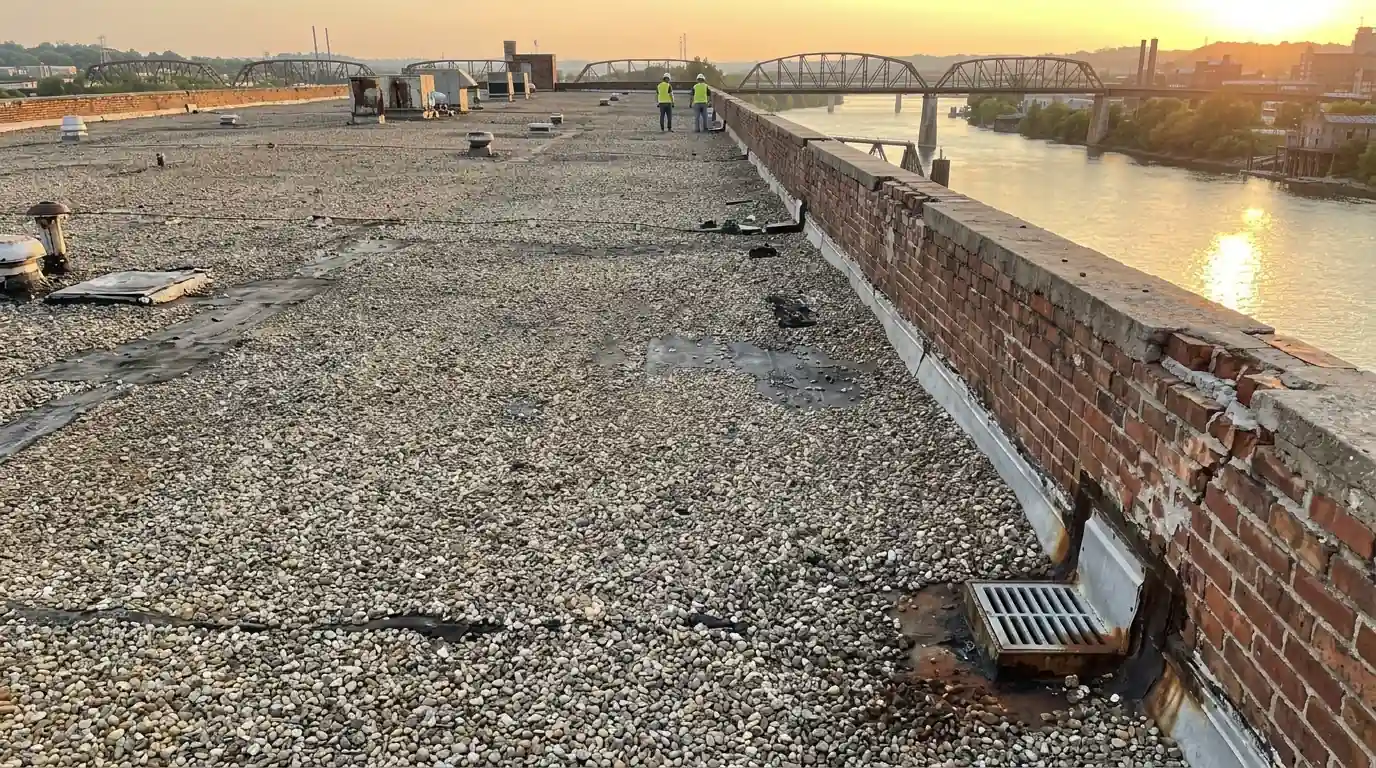
A built-up roof is a sandwich. Plies of felt or fiberglass fabric are mopped together with hot asphalt or coal tar, and a flood coat of the same material holds a layer of gravel on top. The gravel isn't decoration. It shields the bitumen from sun, hail and foot traffic, and it adds weight that helps hold the roof down in wind. Brick warehouses near the Cumberland, mid-century office buildings along West End Avenue and small retail blocks on Gallatin Pike are all places where a BUR may still be doing its job.
These roofs earn respect. A properly built BUR is redundant by design: if one ply is damaged, others stay in place. That is why many of them have outlived the businesses that built them. The weaknesses are age, ponding water and the details. Over time, asphalt dries out, loses oils and gets brittle. Flashings at parapets and curbs, which see the most movement, tend to fail before the field plies do.
The right call depends on the layers, not the look. A roof can seem rough on the surface and still hold up well underneath, or look sound and be saturated inside. We pull cores through the gravel, count the plies, check for wet felts and insulation, and then give you a straight answer on restoring versus replacing. Guessing at that from the roof hatch is how money gets wasted.
Gravel itself deserves a look. Stone that has been rained on for many years collects dirt, moss and windblown seeds, and in shaded spots under mature trees it can grow weeds that root into the flood coat. Roots and moisture break down the asphalt faster than sun does. Where we find vegetation, we clear it by hand, check the bitumen underneath for pinholes, and tell you whether the flood coat needs to be renewed. A thin layer of fresh asphalt and clean stone can add useful years to a sound roof.
Blisters, alligatoring and other signs of an aged gravel roof
Each symptom points to a different cause. Reading them correctly keeps you from patching the wrong thing, and from paying for a full replacement when a targeted repair would hold for years.
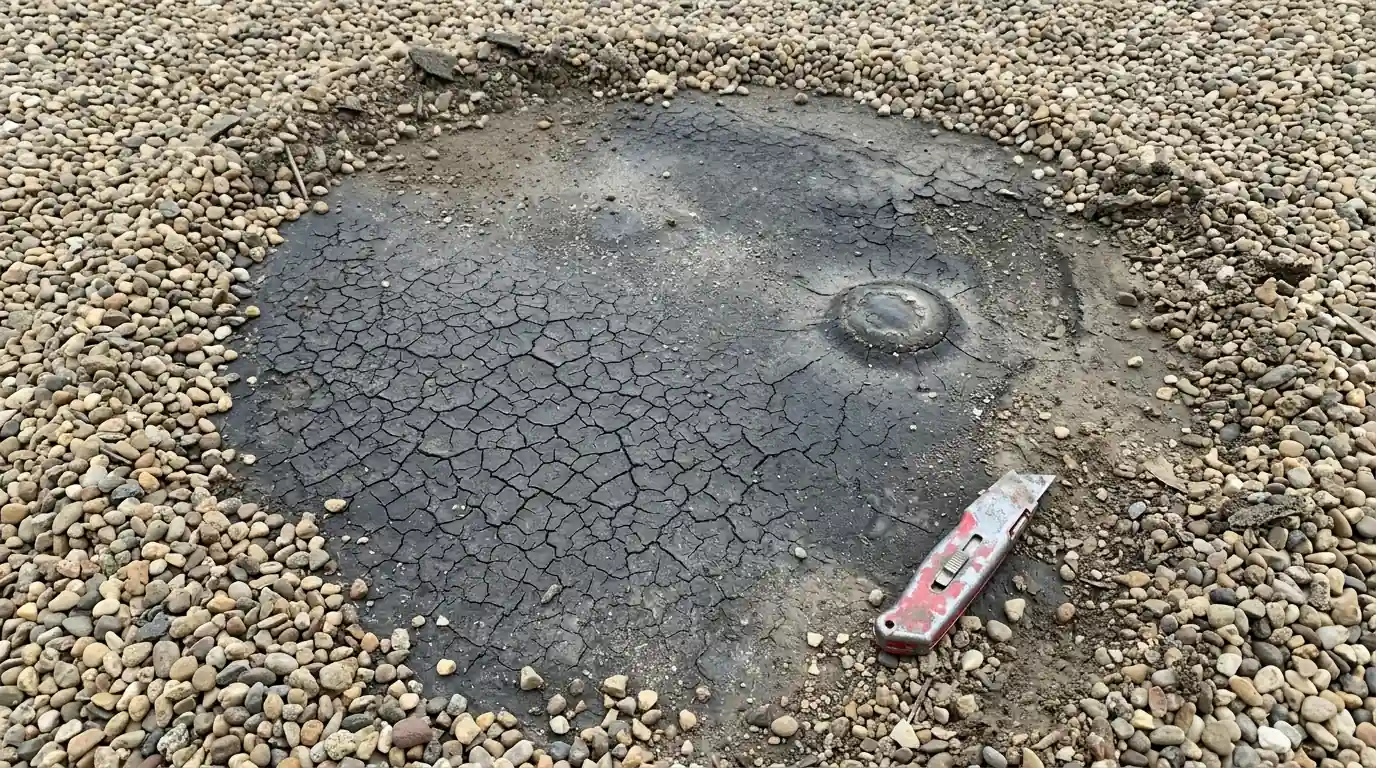
Alligatoring on the surface
A web of shallow cracks in the flood coat means the asphalt has dried and oxidized. It's cosmetic early, structural later.
Blisters that feel hollow or soft
Trapped moisture or air expands in July heat. A blister that has cracked open lets water into the plies, and one that sits in a traffic lane near the hatch or a rooftop unit gets broken open by boots within a season.
Bare areas where gravel washed off
Wind and drainage can strip stone from the roof and expose the bitumen to sun and hail. Stone that piles up at scuppers and drains also blocks water and makes the ponding worse.
Ridges along felt laps
Straight raised lines usually follow the edges of the felt and show movement in the layers. They tend to crack open first, and a cracked ridge is an easy way for rain to reach the felts.
Splits near parapet walls
Cracks at the base of a wall are thermal movement. If left alone they pull water straight into the plies.
Slippage of the flashing
Base flashing sagging down a wall can mean the adhesive has failed or the nailers have rotted.
Restore or replace: how we decide on a BUR roof
The deciding factor is almost always moisture in the insulation, not how ugly the surface is.
| Restore the BUR | Replace the BUR | |
|---|---|---|
| Condition needed | Dry insulation, sound deck, plies mostly intact | Wet insulation, rotted deck or plies delaminating across the field |
| Typical work | Repair blisters and splits, re-flash walls, apply a reflective coating | Tear off to the deck, install new insulation and a new membrane |
| Disruption | Fewer days on site, gravel cleanup in some cases | Larger crew, hoisting and debris removal |
| Upfront cost | Lower, since no tear-off or new insulation | Higher, but resets the roof's service clock |
| Limits | Won't fix wet insulation or structural problems | Needs permits and may trigger added insulation under energy codes |
How we work on a gravel BUR roof
A gravel BUR hides its condition under stone. The steps below peel back the surface before any price is set.
Gravel sweep and walk
We sweep test areas clear, then walk the roof to mark blisters, splits, ponding and drain condition.
Core cuts and moisture scan
Cores show ply count and wetness. Infrared or capacitance scanning maps wet zones across the field, and each core hole is patched the same day with compatible materials.
Material testing
Where the layers may contain asbestos or other regulated materials, we recommend lab testing before any tear-off.
Repair or tear-off
Restorations get blister repair, ply patching and re-flashing. Replacements go to the deck, with the deck repaired as needed. Gravel is swept or vacuumed and hauled away, never dumped over the edge.
New membrane or restored surface
We install a new roof system or re-surface the BUR with a new cap sheet or reflective coating, depending on what the cores and the moisture scan showed and what your budget can carry this year.
Drains, edges and flashings
Drains are cleaned or replaced, edge metal is reset, and walls get new base flashing with sealed terminations. We test the drains with a hose before we call the roof done, so you know water leaves where it should.
What BUR repair, restoration and replacement cost
Figures are Middle Tennessee ranges for typical commercial buildings. Tear-off, insulation and disposal change the final number, which is why we quote after a site visit.
| Work | Typical range | What moves it |
|---|---|---|
| Blister and split repair visit | $395 to $1,280 per visit | Depends on the number of blisters and the amount of gravel to move. |
| Cap sheet or coating restoration over sound BUR | $3.65 to $6.40 per sq ft | Only after a dry moisture scan. |
| New BUR or modified bitumen replacement | $7.10 to $12.30 per sq ft | Includes tear-off, insulation and new flashing. |
| Replacement with single-ply membrane | $7.45 to $11.75 per sq ft | Often chosen when owners want a lighter, faster install. |
What pushes a price up or down:
- Number of existing layers that have to come off
- Wet insulation or deck damage hidden under the old plies
- Presence of asbestos-containing materials, which changes disposal rules
- Height of parapets and number of penetrations to re-flash
- Access for hoisting gravel and debris on tight downtown lots
Ranges reflect recent Middle Tennessee work and are not a quote; we price after a site visit. See the full Budget Guide.
Hot asphalt, kettles and what we use on older roofs today
Traditional BUR is mopped in place with hot asphalt from a kettle. It's a proven method but it involves fire risk, odor and heavy equipment. Some Nashville buildings, particularly occupied ones near restaurants, clinics or apartments, can't tolerate the smell or the open flame. Cold-applied adhesives and modified bitumen systems offer similar redundancy with less fuss.
That is why many replacements of old BUR now go to modified bitumen, TPO or PVC. Each of them has strengths: mod-bit keeps the multi-ply character, TPO and PVC are lighter and weld their seams. We compare options on your building, explain how long each tends to last, and share the price difference. If you want to stay with a gravel BUR for its weight and performance under foot traffic, we can still price it.
Energy codes are part of the replacement conversation. When a roof is replaced to the deck, current energy requirements can call for added insulation, and that changes parapet heights, drain elevations and the details at doors and equipment curbs. A roof that was fine at one inch of perched board may need tapered polyiso and raised flashing to meet code today. In Davidson County, Metro Nashville Codes handles the building permit, and other counties run their own offices. We sort out the permit path early so the schedule holds.
What to confirm before we cut cores in your BUR
A short checklist keeps the survey fast and the findings accurate. You can gather most of it from a facilities binder, a tenant, or a walk through the building's mechanical room before we arrive.
- Roof plans or past invoices that show how many plies were installed
- Any history of asbestos testing or abatement on the building
- Locations of interior stains and the dates they appeared
- Whether the roof carries gravel, a cap sheet or a coating
- Roof access method and who holds the keys
- Which tenants might be sensitive to odors, noise or dust
- Whether the roof also supports rooftop equipment on stands or curbs
Test old felts before tear-off, not after
Roofs installed before the late 1980s can contain asbestos in felts, flashing cements or mastics. We don't guess. When a BUR is old enough to raise the question, we recommend sampling and lab testing before tear-off planning, because the results change how debris is handled and what the job costs. Finding out after the crew is on the roof means stopped work, extra cost and uneasy tenants. Planned upfront, it is just another line in the budget. Ask any contractor bidding your BUR whether testing is in their price, since it is easy to leave out and expensive to add later.
Need built-up roofing on a Nashville building?
Call (615) 716-3057 any hour. We look at the roof, show you what we found and price the work before anything starts.
Where we do built-up roofing around Nashville
The ZIP codes below cover most of the buildings we work on. Every one links to its local page, and the full locations list has 62 more.
- Nashville 37219
- Downtown Nashville 37219
- East Nashville 37206
- Antioch 37013
- Madison 37115
- Donelson 37214
- Hermitage 37076
- Bellevue 37221
- Green Hills 37215
- Franklin 37064
- Brentwood 37027
- Murfreesboro 37130
- Smyrna 37167
- La Vergne 37086
- Mount Juliet 37122
- Lebanon 37087
- Hendersonville 37075
- Gallatin 37066
- Spring Hill 37174
- Columbia 38401
- Goodlettsville 37072
Work that often goes with built-up roofing
Repairs and new roofs on Mule-Hide, GenFlex, Polyglass and Henry systems, matched to what the building already has where we can.
Built-Up Roofing questions from Nashville owners
How long can a gravel built-up roof last in Nashville?
A well-built BUR with good drainage can serve for many years, and some outlast the owners who installed them. Heat, ponding and dried-out asphalt shorten that. We judge remaining life by cutting cores and scanning for moisture rather than by guessing from age.
What causes blisters in built-up roofing?
Blisters appear when moisture or air gets trapped between plies and expands in summer heat. Small, dry blisters can be monitored. Blisters that crack, sag or feel wet need repair, because water can travel through the plies. We cut, dry, re-lay and patch them with proper materials.
Can I restore my BUR instead of replacing it?
If the insulation is dry, the deck is sound and most plies are intact, restoration with repairs, new flashing and a cap sheet or reflective coating can work. A wet roof can't be restored. We cut cores and scan the roof before we tell you which path applies.
Do you need to test old BUR for asbestos before replacement?
On older buildings, we recommend lab testing before tear-off. Some felts, flashing cements and mastics from earlier eras may contain asbestos. Testing tells us how debris must be handled, which affects cost and schedule. We plan it into the work so there are no surprises.
Who can repair a leaking BUR roof tonight?
Phone (615) 716-3057 at any hour. We answer 24/7. We find the leak path, stop water with a temporary repair when we can, and plan the permanent fix after we check the plies and insulation around the damaged area and talk through the next steps with you.