Commercial roofing in Maury County, TN (38401)
Maury County mixes a historic Columbia square with industrial parks, churches and the growing Spring Hill side. We trace leaks on brick-era flat roofs and newer metal and membrane buildings alike.
- Buildings
- Historic masonry, industrial parks, churches, new retail
- Corridor
- Highway 31, Nashville Highway, Highway 412, I-65
- Watch for
- Parapet leaks, aging seams, drain clogs
- Access
- Square parking limits, industrial truck traffic
Short answer
Maury County commercial roofs include older flat roofs on masonry buildings in Columbia, metal and membrane roofs in industrial parks, and newer retail and school-area buildings near Spring Hill. Most leaks begin at flashings, drains, parapets and aging seams. We locate the water source before quoting any repair.
Three kinds of roofs across Maury County
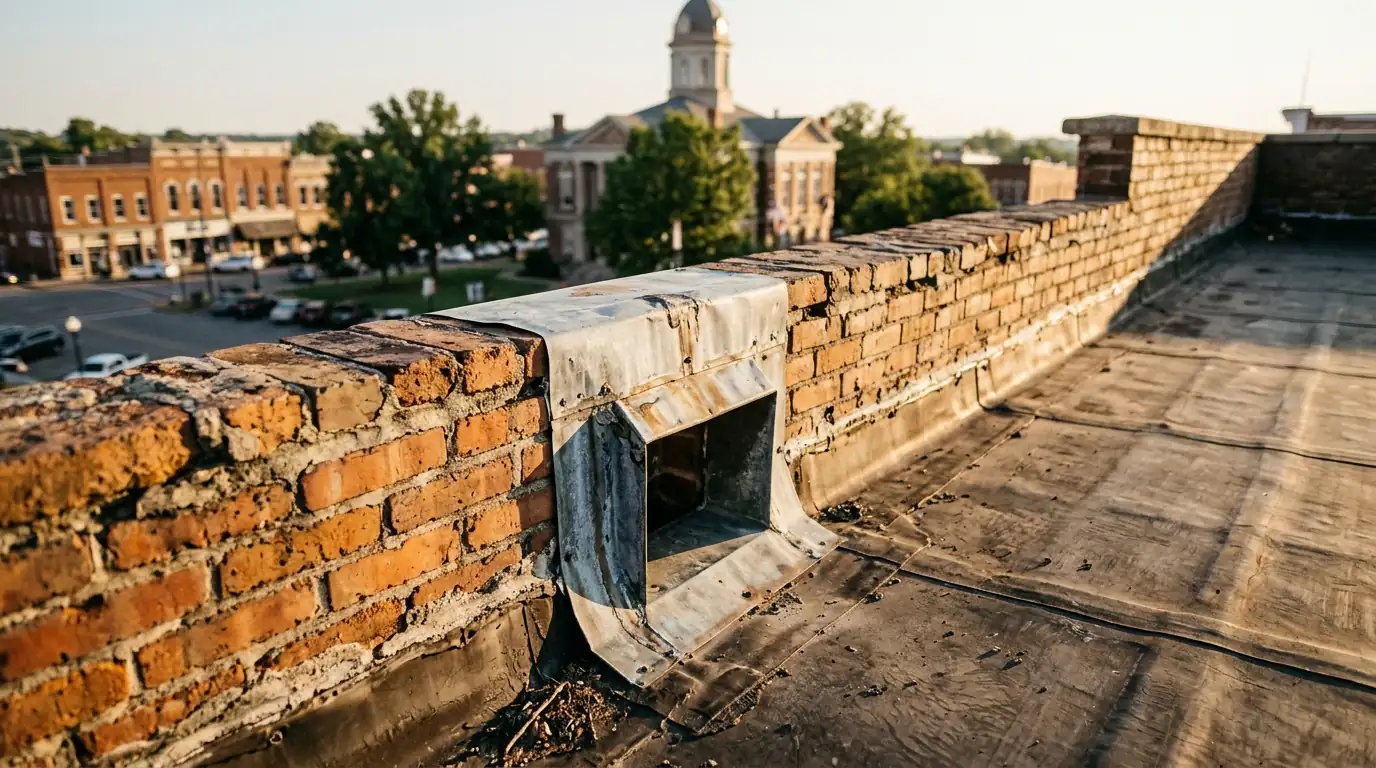
Columbia has a historic downtown around the courthouse square, where older masonry buildings often carry low-slope roofs behind parapets. Those roofs are small but fussy: tight access, shared walls and drainage that depends on a few scuppers or internal drains.
Mount Pleasant and the industrial areas around Columbia add manufacturing and warehouse buildings, many with metal roofs or single-ply membranes. On the north end, Spring Hill's commercial growth along Highway 31 and Main Street brings newer retail, schools and offices with first-generation flashings.
The Duck River runs through Columbia, and low spots near it see a lot of moisture. Basements, boiler rooms and older ground-floor spaces can hide humidity problems that look like roof leaks. We check the roof carefully, but we also help owners rule out plumbing, condensation or wall seepage, so money goes to the actual cause.
Spring Hill, in the north, is where the county's newer commercial growth sits. Roofs there are younger and usually performing, but they are not immune to early detail failures. We see pipe boots, curbs and edge metal causing most calls, and those are quick repairs when caught before insulation gets wet.
Leak clues on Columbia's older commercial buildings
A roof over a century-old shell behaves differently from a modern box. Look for these.
Stains along shared walls
Water often enters at the parapet and runs down the common wall, appearing far from the roof edge.
Bubbling paint near the cornice
Moisture behind brick or trim means flashing or coping has failed above.
Clogged scuppers
Small drains in older parapets fill with leaves and grit. Water then finds the nearest low point.
Cracked mortar at the top course
Open joints let water into the wall and under the roof edge.
Patch on top of patch
Layers of roof cement signal repeated failures at the same details and a probable wet substrate.
Ceiling tile sagging in rooms below
Slow leaks soak insulation and tile long before water drips.
How we find the source on a small, tricky roof
We start inside, noting stains and moisture on ceilings and walls, then go up and trace likely entry points: parapet caps, counterflashing, drains and equipment penetrations. Where it helps, we run a controlled water test, wetting one area at a time while someone watches inside.
That patient approach beats guessing. On a two-story building near the square, the stain may sit twenty feet from the actual entry point, and a patch in the wrong place just moves the leak to a new location. Once we find the source, we explain the fix and what it will cost to do it right.
Mount Pleasant and rural Maury County have their own roof population: farm supply stores, small shops, volunteer fire stations and church halls. Many of these have metal roofs of varying ages. Some are in better shape than their owners think, and some need attention sooner than expected.
A good survey separates cosmetic issues from real ones. Surface rust on a panel is not always a leak. A loose screw is a leak waiting to happen. We mark each finding with a priority so you can fix urgent items now and spread the rest across the year.
Industrial parks and church campuses in the county
Churches in Maury County often have both steep sanctuary roofs and flat sections over fellowship halls, so a single visit may involve shingle, metal and membrane work. Industrial buildings have their own concern: fumes and dust from nearby operations can accelerate wear on membranes and coatings. We ask what happens under and around the roof before choosing a system.
What helps us diagnose a Maury County leak quickly
Gather what you can before the call. It saves time on the roof.
- Photos of interior stains with the date they first appeared
- Whether leaks happen only in wind-driven rain or in any rain
- Any recent work by other trades on the roof, such as HVAC
- Age and type of the roof if you know them
- Roof access location and any safety limits
- Whether the building is occupied during the day
Roofing work we do most in Maury County
Six services building owners here call about most. The full catalog has 45.
Roof trouble in Maury County?
Call (615) 716-3057 about a building in Maury County (38401). The line is answered 24/7, and the first question is always where the water is showing.
Roofing questions from Maury County
Can you find a leak in an old Columbia downtown building?
Yes. We combine interior mapping, a careful roof walk and, when needed, controlled water testing. Older buildings often leak at parapets and shared walls, away from where the stain shows.
Do you serve Spring Hill and Mount Pleasant as part of Maury County?
Yes. We cover Columbia, Spring Hill, Mount Pleasant and the roads between them. Each town handles permits separately, and we check requirements before replacement work.
Why do Maury County industrial roofs fail early?
Usual causes are poorly welded seams, fasteners backing out of metal decks, ponding water and exposure to dust or exhaust. A survey shows which applies and whether repair makes sense.
Is there an after-hours line for roof emergencies in Columbia?
Yes. Call (615) 716-3057 any hour. We prioritize stopping water with tarps or temporary repairs, then plan the lasting fix when the weather allows.