Commercial roofing in West End, Nashville (37205)
Along West End Avenue, mid-rise offices, medical suites and apartment buildings run with little tolerance for downtime. We repair and replace their roofs while keeping equipment, tenants and patient areas protected.
- Buildings
- Mid-rise offices, medical suites, apartments
- Corridor
- West End Avenue, Harding Pike, I-440
- Watch for
- Equipment curb leaks, drain clogs, seam wear
- Access
- Occupied floors, limited roof access, tenant schedules
Short answer
West End mid-rise and medical roofs are usually single-ply membranes with heavy rooftop equipment. Leaks start at curbs, drains and seams, and tenants can't tolerate long shutdowns. We trace the source, plan work around critical spaces, and use sequencing that protects what's beneath. Call (615) 716-3057 any hour.
Roofs over offices, clinics and apartments
West End Avenue runs from the Vanderbilt area out toward Harding Pike and I-440, and the buildings along it change character as you go. Closer in, you'll see mid-rise offices and medical buildings supporting the university and nearby hospitals. Further out, apartment buildings and professional offices dominate. Most carry single-ply roofs, either TPO or PVC, with substantial HVAC equipment on top.
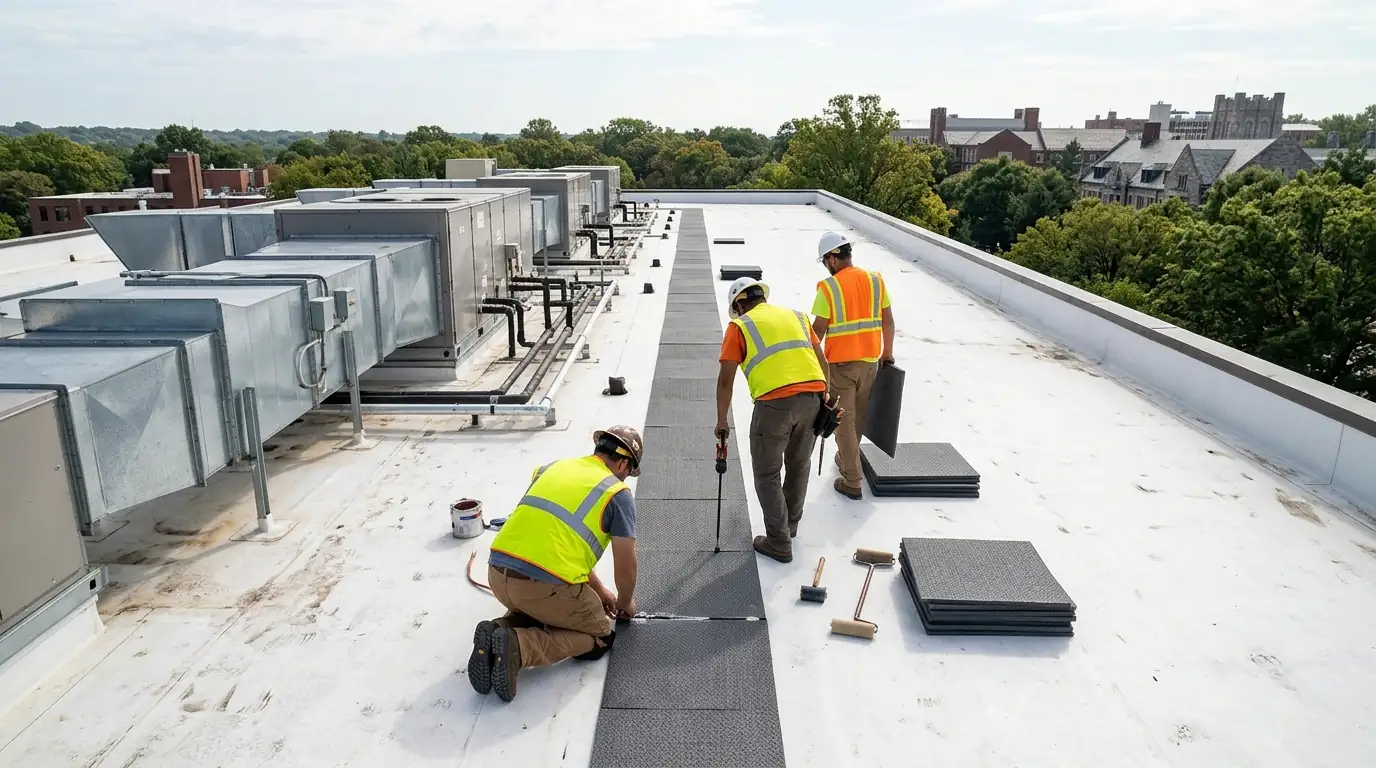
Roof loads here are real. Air handlers, exhaust fans and sometimes lab or medical gas equipment sit on curbs and rails, which means technicians walk the roof regularly. Foot traffic wears membranes along those paths, and every service visit adds the chance of a cut. A good plan includes walk pads and a way to check the membrane after any contractor visit.
Drainage on mid-rise roofs is mostly internal. Water collects at drains in the field of the roof, passes through pipes inside the walls, and exits at the base of the building. When a drain clogs, the pipe backs up, and the first sign is often a stain in a lower-floor hallway or a stairwell. We flush drain lines, replace worn strainers and check the pipe connections at the roof, because a loose connection can leak even when the drain is clear.
Tapered insulation and added slope matter a lot on buildings of this age. Many West End roofs were designed to shed water toward interior drains, but insulation compresses where equipment sits and where people walk. Over the years low spots form, and standing water adds weight and wears the membrane. During a replacement we can rework the taper to move water to the drains, which usually costs less over time than living with ponds.
Protecting medical and tenant spaces during roofing
Medical buildings don't have the luxury of a dry week and a loud one. A leak into an exam room, imaging suite or pharmacy storage can interrupt service. We ask which floors hold sensitive equipment, plan tear-off in small sections so the roof is never fully open, and keep a temporary cover ready before rain. Dust and odor control matter near air intakes, so we coordinate with your engineer on which units should be shut down, and when. For apartment buildings, we also post notices through the manager so residents know what to expect and when.
What usually goes wrong on mid-rise West End roofs
Problems here are often tied to equipment and drainage.
Worn membrane along service paths
Technicians walking to rooftop units wear through the surface unless walk pads protect it.
Failed sealant at curb corners
Corners are the weakest part of a curb flashing and are first to open.
Internal drain clogs
Mid-rise roofs with interior drains back up when debris collects in sumps.
Open seams from rooftop movement
Heavy equipment vibration, thermal cycling and old welds can open seams.
Tapered insulation gone flat
Settled or compressed tapered insulation creates ponds that weren't in the original design.
Cracked pitch pans around old pipe clusters
Pitch pans dry and shrink, then open a gap that water finds in wind-driven rain.
Debris from mature tree cover
West End has plenty of old trees, and leaves and seed pods collect in drains and behind equipment.
How we plan access on an occupied West End building
Steps that keep tenants informed and the building safe.
- Confirm roof access route and the elevator or stair we can use
- Identify air intakes near the work zone and shut-down needs
- Schedule noisy tear-off for low-occupancy hours
- Set a protected staging area away from patient and visitor entrances
- Share a daily plan with the building engineer
- Inspect interior ceilings before and after the work
- Whether any tenant has strict vibration or noise limits
- Hours when the freight elevator can carry material
Older apartment buildings near the corridor
Beyond the offices, apartment buildings along and just off West End often have a mix of low-slope membrane roofs over main sections and shingled or metal accents. Balcony roofs, stair tower caps and mechanical penthouses each have their own details. We treat them as separate roof areas so one repair doesn't overlook the next, and we write the scope so a board or manager can approve it section by section.
Stair towers, elevator overruns and penthouses add height changes that complicate flashing. Where a low roof meets a high wall, base flashing and counterflashing need to be set carefully and sealed to a sound substrate. Those transitions are the first places we look when an upper-floor corridor stains after a storm, and they're often missed during general roof work because they sit just out of the way.
Roofing work we do most in West End
Six services building owners here call about most. The full catalog has 45.
Roof trouble in West End?
Call (615) 716-3057 about a building in West End (37205). The line is answered 24/7, and the first question is always where the water is showing.
Roofing questions from West End
Can you replace a roof on an occupied West End medical building?
Yes. We work in small sections, keep the roof closed in at the end of each day, and coordinate shutdowns and noise with your building engineer so patient areas stay protected.
What roof system do West End mid-rise offices usually have?
Mostly TPO or PVC single-ply over polyiso insulation, with interior drains and substantial HVAC equipment. We confirm with a survey and a core cut.
Why do West End roofs leak around rooftop units?
Curb corners, seams and walk paths take the most abuse. Technician traffic and vibration wear them, and sealant ages. Walk pads and curb repairs usually fix it.
How do you handle dust and fumes near air intakes?
We map intakes before work, plan which units to shut down and when, and choose methods that limit odor. Your engineer approves the plan first.