Commercial roofing in Franklin, TN (37064)
Franklin pairs a preserved downtown with large modern office parks, and the two need almost opposite roofing skills. We repair old brick-building flat roofs on Main Street and maintain the membranes on the Cool Springs side.
- Buildings
- Historic brick storefronts, office parks, retail
- Corridor
- Main Street, Mallory Lane, Franklin Road, I-65
- Watch for
- Parapet leaks downtown, flashing at office curbs
- Access
- Downtown event closures, shared alleys
Short answer
Franklin's commercial roofs fall into two groups: older flat roofs behind parapets in the historic downtown, and newer single-ply or metal roofs on office and retail buildings near Mallory Lane. The older group leaks at parapets and drains. The newer group leaks at flashings and seams. We survey first and quote after a site visit.
Roofing a downtown that people come to look at
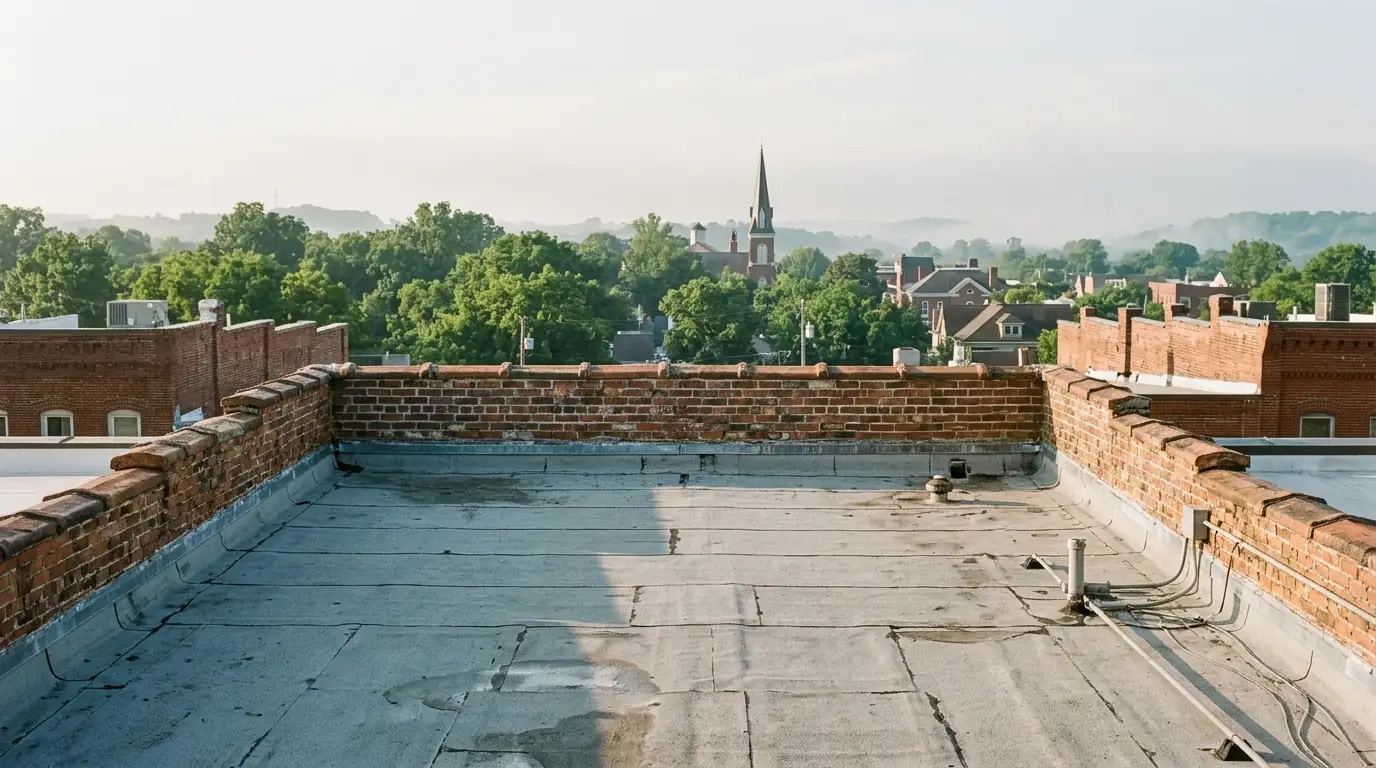
Franklin's Main Street is one of the most visited historic districts in Middle Tennessee, with festivals, shops and restaurants in brick buildings that have been standing a long time. Most of those buildings have low-slope roofs hidden by parapets, and the roofs have been patched, coated and recovered over the years.
Work there means planning around events, deliveries and foot traffic. We stage materials in alleys when we can, keep lifts off the street during busy hours, and protect the shared walls that touch neighboring buildings. Nobody wants a hot kettle or a pile of debris in front of a restaurant at Saturday lunch.
The Civil War history here is part of Franklin's identity, and the downtown district draws visitors year round. That puts a premium on keeping roof work tidy, quiet and quick. We cover work areas with protection, remove debris daily and never leave open roof sections overnight if rain is forecast.
Neighboring tenants usually care more about schedule than technique. A restaurant wants no dust during the dinner rush. A law office wants no hammering during depositions. We ask early and build the daily plan around those answers, so complaints are rare.
What goes wrong on historic Main Street roofs
These patterns repeat on older brick storefronts in downtown Franklin.
Parapet cap cracks
Old masonry caps crack and let water into the wall. The stain shows on interior brick, not at the roof.
Shared-wall flashing
Where one building's roof meets the next, flashing is often improvised and open to water.
Internal drain failure
Cast-iron drains rust or clog, and water backs up onto the roof surface.
Layers of old coatings
Stacked coatings crack and peel and hide the real condition of the membrane beneath.
Rooftop dining equipment
Vents, grease hoods and exhaust fans bring penetrations that need regular flashing checks.
Skylight curbs
Older skylights leak at the curb long before the glass fails.
The Cool Springs office-park side of Franklin
Along Mallory Lane and the edge of Cool Springs, Franklin's roofs are newer: TPO and PVC on office buildings, standing seam on some medical and church properties, and large retail roofs with a lot of rooftop equipment. The failures are quieter but real. Seams lift where HVAC technicians walk, sealant dries around penetrations, and drains clog with leaves from landscaped lots.
A maintenance plan fits these buildings well. Two visits a year to clear drains, check flashings, re-seal penetrations and photograph the roof catch most problems early, and they give a facility manager a written record to take to the owner when a budget decision comes up.
Mallory Lane runs through the heart of Franklin's commercial strip, and the buildings nearby share a few traits: tapered insulation, rooftop equipment, screen walls and a lot of landscaped lots feeding leaves into drains. Maintenance is mostly about keeping water moving off the roof and keeping penetrations sealed.
When a roof here reaches the end of its life, we usually see saturated insulation in the low areas near drains. Replacement then involves new tapered insulation to correct drainage, not just a new membrane. That detail improves performance, and it changes the budget, so we raise it early.
Working with Franklin's permit and historic-district realities
Franklin runs its own building permit process, and downtown projects can involve additional review because of the historic character of the district. We don't promise approvals or timelines. We tell you what the work involves, check with the city on what applies to your address, and keep the visible look of the roofline in mind when a parapet or coping detail is touched.
Before approving Franklin roof work on an older building
Short list, big savings.
- Ask for core cuts to confirm layers and insulation condition
- Confirm who will protect neighboring walls and shared roofs
- Ask how parapet and coping details will be handled
- Check delivery and hoist plans against downtown event dates
- Request photos of the existing condition before work starts
- Get the scope in writing, including drains and flashings
Roofing work we do most in Franklin
Six services building owners here call about most. The full catalog has 45.
Roof trouble in Franklin?
Call (615) 716-3057 about a building in Franklin (37064). The line is answered 24/7, and the first question is always where the water is showing.
Roofing questions from Franklin
Can you repair a flat roof on a Main Street building in downtown Franklin?
Yes. We work in tight alleys and around events, protect shared walls, and focus on parapets, drains and flashings, where most older roofs leak. We survey before quoting.
Do Franklin office parks need regular roof maintenance?
It helps a lot. Twice-yearly visits to clear drains, check seams and reseal penetrations catch small problems cheaply. A written report also supports budget requests.
Does Franklin require a permit to replace a commercial roof?
Replacements usually need one through the city's building office. Repairs often don't. Downtown projects may involve extra review, so we confirm requirements for your address first.
How do you schedule roof work near Franklin's festivals?
We ask for your event calendar and plan deliveries, lifts and noisy tasks around it. Staging in alleys and early starts keep disruption low.