Silicone roof coatings for Nashville flat roofs
Your flat roof holds water for days after every storm, and a coating that breaks down under ponding just repeats the leak. Silicone keeps its film in standing water, but only on a roof prepared for it.
- Adhesion test before coating
- Mils checked at each pass
- Phone answered 24/7
Short answer
Silicone roof coating is a fluid-applied, moisture-cured liquid that cures into a flexible, waterproof, reflective membrane over a commercial roof. It tolerates ponding water better than acrylic and resists UV well. It picks up dirt over time, and once cured, only silicone will bond to it, so every future recoat has to be silicone.
Why silicone is the coating for roofs that hold water
Flat roofs in Middle Tennessee rarely drain perfectly. Decks deflect, drains sit a half inch high, and old patches create dams. Water that stays on the surface for forty-eight hours or more breaks down most coatings, because they soften, blister or wash out. Silicone does not. Its cured film is not affected by standing water, which is why it is the usual answer on low-slope roofs with real ponding. We see this most on older built-up and modified bitumen roofs where years of patches have created small dams around drains and equipment curbs.
Silicone is a liquid that cures from ambient moisture and turns into a flexible rubber-like skin. High-solids formulas leave more cured film per gallon, so you reach the specified thickness in fewer passes. That matters on a retail strip along Gallatin Pike, where tenants will not tolerate a roof job that drags for weeks. High solids also means less shrinkage as the coating cures, so the film you measure wet is closer to the film you end up with.
It is also stable under UV and temperature swings, which suits a climate that goes from humid summers to January freezes. The trade-offs are real, though. Silicone costs more per gallon than acrylic, it attracts dirt, and it gives you a one-way commitment to silicone for the life of the roof. Our job is to explain all three before the first pail opens. We would rather lose a bid than put silicone on a roof where it will cause a problem later.
Where silicone beats the other coatings
These are the conditions on Nashville commercial roofs that push us toward silicone instead of acrylic or urethane.
Ponding that lasts past 48 hours
Low spots between drains on older single-ply and mod bit roofs hold water long after the sun is out. Silicone is built to sit in it. A level, clean water test with a hose on a dry day shows us which areas truly pond.
Roofs that cannot be re-sloped
A concrete deck cannot be made to pitch without new tapered insulation. Coating handles the water that stays while you plan the longer fix. A tapered insulation scope can follow when the budget allows.
Flat metal and SPF roofs with standing water
Foam roofs that dip between purlins and screwed-down panels that sag at laps often need a coating that ignores ponding. Silicone bridges the sag and keeps the fasteners covered.
Heavy sun exposure on south-facing slopes
UV beats up acrylic faster on large unshaded expanses, such as a distribution roof in Smyrna with no parapet shade. Silicone holds up well against that kind of constant exposure.
Long-term cost planning
Silicone usually lasts longer between recoats, which can lower the total cost over several budget cycles. Washing keeps the reflectivity up in the meantime.
Cold storage and food plants needing a clean surface
A smooth, cured silicone skin cleans well and does not shed chalk, a point inspectors notice around vent intakes. Intakes and equipment stay cleaner during maintenance.
Silicone versus acrylic on a Nashville roof
Neither is better in every case. This table shows where each one earns its place. Dirt pickup and the recoat rule matter most for long-term planning.
| Silicone | Acrylic | |
|---|---|---|
| Ponding water | Handles standing water for extended periods | Needs positive drainage; fails under long ponding |
| Cure and weather | Moisture-cured; tolerates damp mornings once it skins | Water-based; needs warm, dry conditions to cure |
| Dirt pickup | Collects dirt, so reflectivity drops without washing | Stays cleaner but chalks over time |
| Future recoats | Only silicone will adhere to cured silicone | Can be recoated with acrylic or often with silicone |
| Price per sq ft | Higher material cost | Lower material cost |
How we apply silicone so it holds
Most coating failures happen at the prep stage. Ours is built around testing before spraying.
Survey and moisture check
We cut cores and scan for wet insulation. Silicone traps moisture under a very low permeability skin, so we remove what is saturated first. That order of work keeps the coating from becoming a sealed lid over a wet roof.
Repair and detail
Open seams, cracked flashings and loose fasteners are fixed before any coating goes on. We reinforce corners and penetrations with fabric. Skipping this means leaks reappear at the details within a season.
Wash with a detergent clean
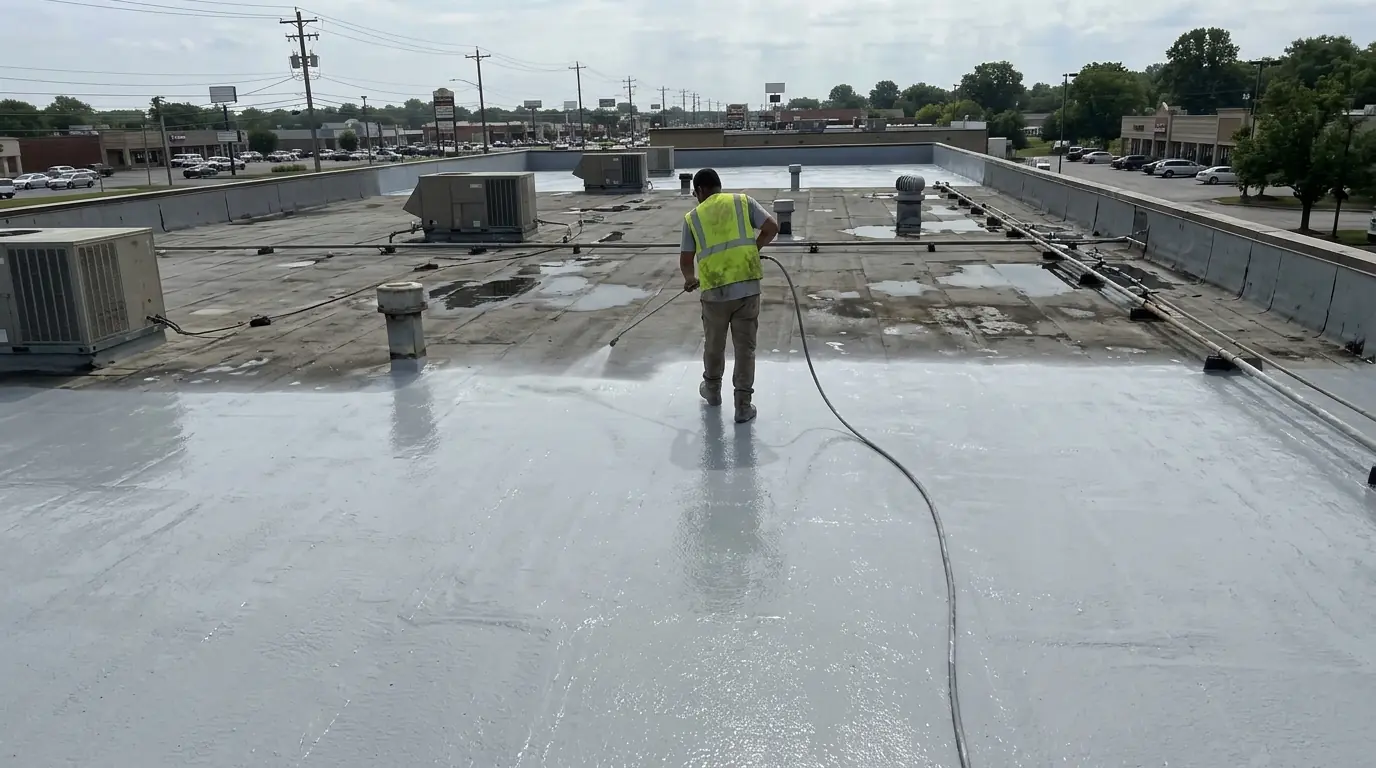
A pressure wash removes dirt and oxidation. We let the roof dry, because wet surfaces affect adhesion tests and cure.
Run a test patch
A small area is coated and pulled after cure to confirm the bond. If the old membrane rejects silicone, we prime or change the plan. It is the cheapest insurance in the whole project.
Apply in measured coats
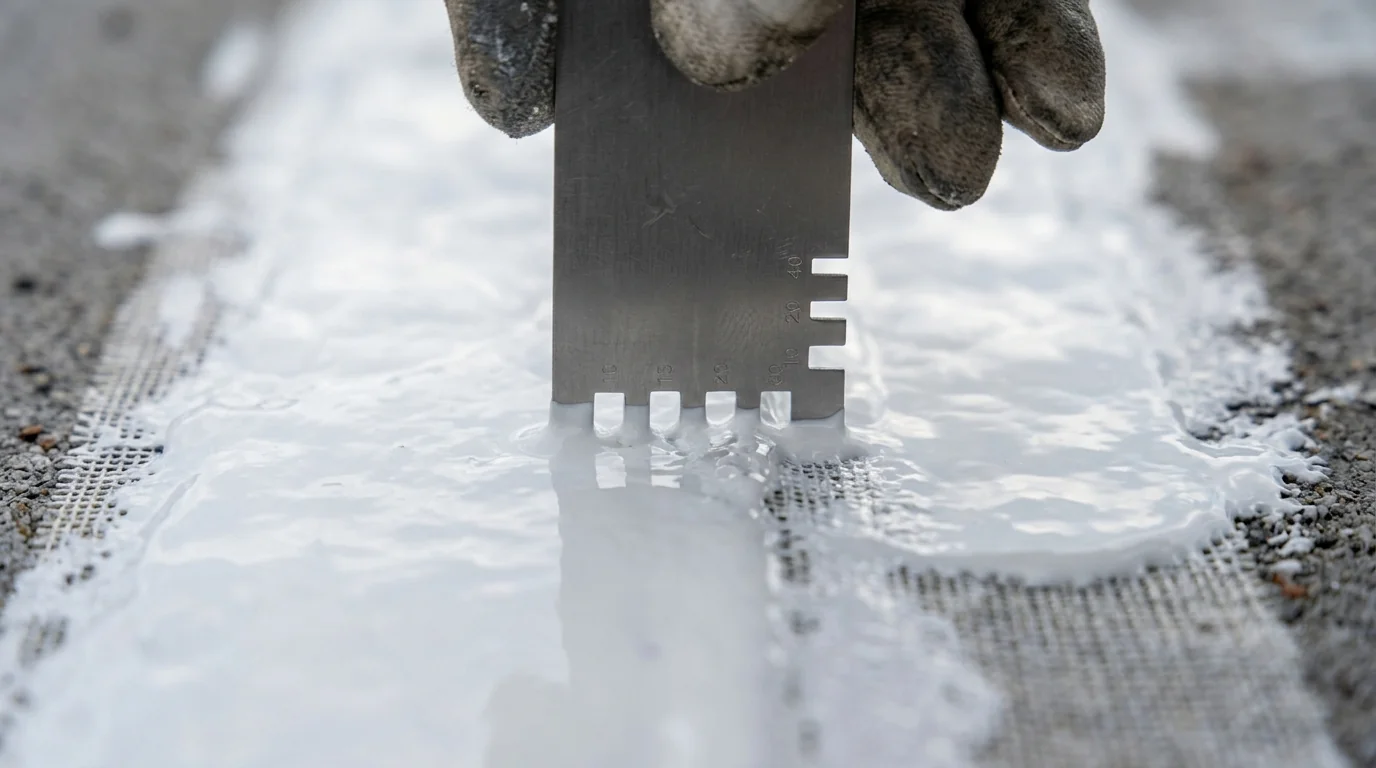
We spray or roll to the wet mil thickness on the data sheet, checking with a gauge at set intervals, and leave a uniform film. Thin spots at edges and around curbs are re-coated before we leave.
Final walk and record
We walk the roof with you, photograph the work and give you batch numbers and thickness records for warranty paperwork.
What silicone coating costs per square foot
Coatings are priced by area and thickness, plus repairs. We quote after a site visit, because roof condition changes everything.
| Work | Typical range | What moves it |
|---|---|---|
| Silicone coating over a clean, sound single-ply membrane | $2.38 to $3.96 per sq ft | Includes washing and a single full coat to specified thickness. |
| Silicone over modified bitumen with primer | $2.72 to $4.35 per sq ft | Primer needed on weathered asphalt, raising material and labor. |
| Silicone over metal with rust treatment | $2.95 to $4.68 per sq ft | Includes wire brushing, rust converter and detailing at seams. |
| Seam and flashing reinforcement | $6.40 to $11.25 per linear ft | Fabric and extra coating at laps, curbs and terminations. |
What pushes a price up or down:
- Specified dry film thickness, which sets how many coats you need, since each additional mil adds material and labor
- Membrane type and whether primer is required for bond
- Number of penetrations and detail areas per thousand square feet
- Surface condition after washing, including old patches and mastic
- Roof height and how material gets to the roof, such as pump hose or hoist
Ranges reflect recent Middle Tennessee work and are not a quote; we price after a site visit. See the full Budget Guide.
The dirt pickup and the recoat rule
Silicone's surface is slightly tacky when cured, so airborne dirt sticks. A white silicone roof beside a busy corridor like Murfreesboro Pike or I-40 can look gray within a season or two. Reflectivity falls with it. Annual washing restores much of it, and our maintenance visits include it if you want that done. Roofs near tree cover also collect pollen and leaf stain every spring.
The recoat rule is the one owners need to understand before signing. Nothing but silicone bonds to cured silicone. Acrylic peels off it, and urethanes will not stick without a special surface treatment. If you coat with silicone, every future coat has to be silicone, or you tear the roof off.
That is a fair trade for many buildings. A roof that ponds and sees heavy summer sun may live its whole second life under silicone. It is a poor choice for a roof you plan to cover with a new membrane in a few years, because adhesion to that silicone is hard to get. Tell us your plan for the building and we will tell you whether silicone fits.
What to confirm before you approve a silicone bid
Use this list to compare any silicone coating proposal, ours included. A bid that cannot answer these is a bid to question.
- The specified dry film thickness in mils, written into the scope of work and checked on the roof
- Cut cores or a moisture scan showing the insulation is dry
- An adhesion test result on your existing membrane
- Primer type listed if the membrane needs one
- Fabric reinforcement at seams, corners and penetrations
- Who washes the roof, and when, before application
- Warranty terms, including what recoats are required
- Written note that future recoats must be silicone
Damp mornings are not a deal breaker for silicone
Silicone cures by absorbing moisture from the air, so Nashville's humid mornings do not stop it the way they stop acrylic. What does stop it is liquid water, dew on the surface or rain within a few hours of application. We start after the roof has dried, track the dew point through the day and quit early when the afternoon storms build. Spring and fall give the cleanest days, but a lot of summer work can be done with good scheduling. Wind also matters, because overspray drifts onto cars and neighboring glass.
Need silicone roof coatings on a Nashville building?
Call (615) 716-3057 any hour. We look at the roof, show you what we found and price the work before anything starts.
Where we do silicone roof coatings around Nashville
The ZIP codes below cover most of the buildings we work on. Every one links to its local page, and the full locations list has 62 more.
- Nashville 37219
- Downtown Nashville 37219
- East Nashville 37206
- Antioch 37013
- Madison 37115
- Donelson 37214
- Hermitage 37076
- Bellevue 37221
- Green Hills 37215
- Franklin 37064
- Brentwood 37027
- Murfreesboro 37130
- Smyrna 37167
- La Vergne 37086
- Mount Juliet 37122
- Lebanon 37087
- Hendersonville 37075
- Gallatin 37066
- Spring Hill 37174
- Columbia 38401
- Goodlettsville 37072
Work that often goes with silicone roof coatings
We install and repair systems from Carlisle SynTec, GAF, Johns Manville and Sika Sarnafil, and we patch whatever is already on your roof.
Silicone Roof Coatings questions from Nashville owners
How long does a silicone roof coating last on a Nashville commercial roof?
Service life depends on thickness, roof condition and maintenance. Properly applied silicone often runs well over a decade before a maintenance recoat is considered. We do not promise a number. Warranty terms from the coating manufacturer, when the roof qualifies, give you the written coverage period.
Can silicone be applied over an existing TPO roof?
Often yes, after cleaning and an adhesion test. TPO is a tricky surface for some coatings, so we test a patch and prime if the manufacturer calls for it. If the membrane has shrunk or the insulation is wet, we repair or replace first.
Why does silicone roof coating get dirty?
Cured silicone stays slightly tacky, so dust, pollen and exhaust particles stick to it. A white roof will darken over time near busy roads and plants. Pressure washing brings back much of the reflectivity, and we offer it as part of maintenance visits.
Can acrylic be applied over silicone later?
No. Acrylic and most other coatings will not bond to cured silicone and tend to peel off it in sheets. Only another silicone coat adheres reliably. That is why we ask about your long-term plans for the roof before recommending silicone, including whether a new membrane is coming.
Does silicone fix a roof with wet insulation?
No. A coating cannot dry out saturated insulation, and silicone's low permeability can trap moisture. We find wet areas with cores and scans, cut out what is saturated, and repair the deck. The coating goes on only after the roof below it is dry.