Commercial roofing in Thompson's Station, TN (37179)
Thompson's Station is a small town with new commercial buildings going up along Highway 31, between Franklin and Spring Hill. Many are metal or light-gauge buildings where fasteners and sealants decide whether a roof stays dry.
- Buildings
- Metal commercial, small retail, churches, barns
- Corridor
- Highway 31, Thompson's Station Road, Critz Lane
- Watch for
- Loose fasteners, dry laps, unfinished flashing
- Access
- Open lots, long gravel drives, wind exposure
Short answer
Thompson's Station commercial roofs are mainly newer metal and single-ply buildings along Highway 31, plus a few churches and farm-edge structures. The most frequent issues are loose fasteners, dried sealant at laps and unfinished flashing at penetrations. We reseal, refasten and, where it makes sense, coat the roof to extend its life.
A small town where metal roofs dominate
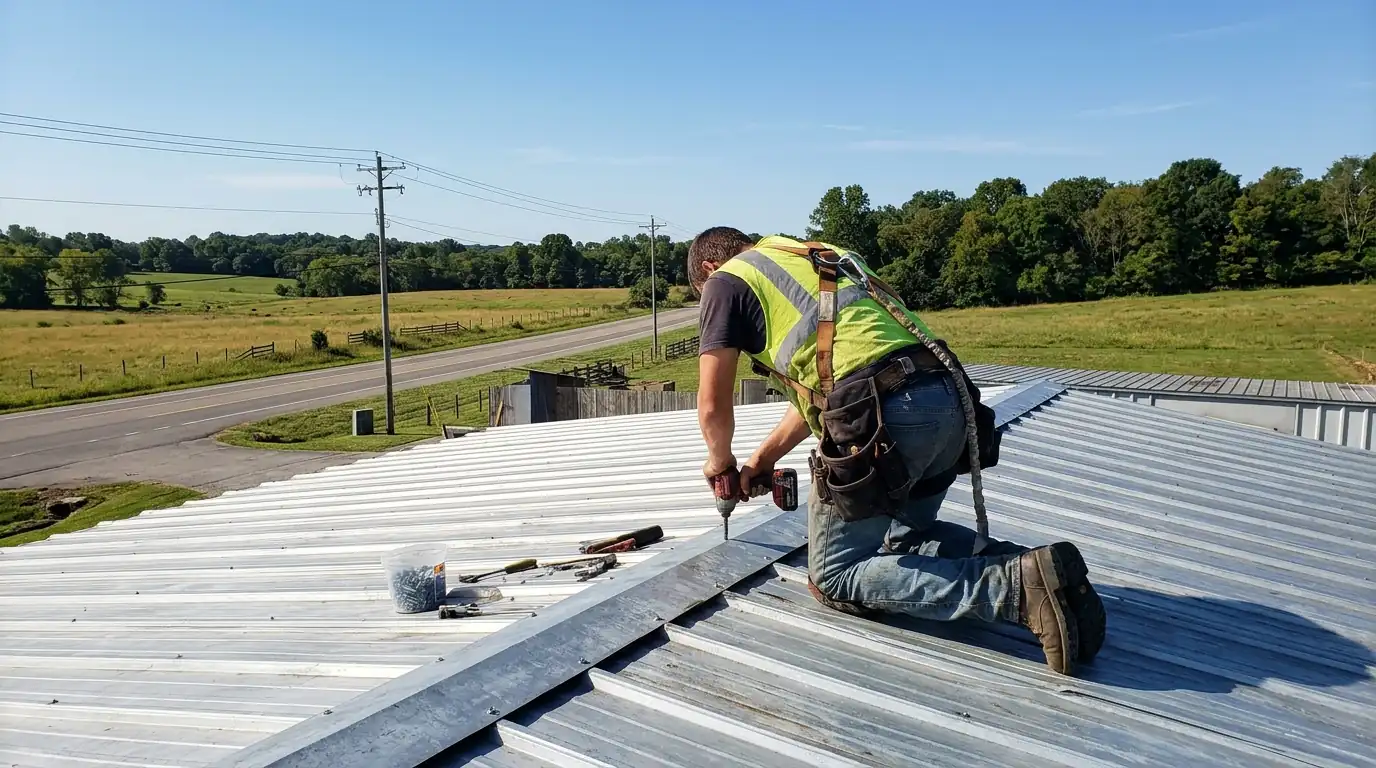
Along Highway 31 between Franklin and Spring Hill, Thompson's Station has seen new commercial buildings arrive on open land. Many use metal panels because they go up fast and suit the style of the area. That works well when fasteners are tight and sealant is fresh. It works poorly when nobody checks the roof for five years.
Open ground also means wind. Metal panels flex, edges vibrate, and exposed fasteners loosen. We see washers split and screws backing out on buildings that look perfect from the parking lot.
Thompson's Station is rural at the edges, and wind sweeps across open fields. Metal panels at the eaves and gables take the brunt. Over time, that wind loosens trim and opens gaps at laps. A trim repair costs little and prevents wind-driven rain from entering. We check trim first on every metal roof here.
Agricultural-style buildings blur the line between commercial and farm use. A large metal barn used for events or storage still needs a dry roof. We repair these with the same care as a retail building, and we explain which fixes will last and which are stopgaps.
Maintenance signs on exposed-fastener metal
These indicators say a metal roof needs attention now, not next year.
Fasteners standing proud
A screw sitting above the panel has lost its grip and its seal.
Brown streaks below fasteners
Rust trails show water entering at a screw hole.
Sealant gaps at laps
Dried or missing butyl lets wind-driven rain into the side lap.
Oil-canning and dents
Heavy distortion suggests panels are overstressed or hail-struck.
Ridge cap gaps
Open closure strips under ridge caps let rain and birds into the building.
Condensation under panels
Moisture inside may not be a leak but a ventilation or insulation problem.
Re-fasten and reseal, coat, or retrofit?
Three common paths for an aging metal roof in Thompson's Station.
| Re-fasten and reseal | Silicone or acrylic coating | Metal retrofit | |
|---|---|---|---|
| Best when | Panels sound, fasteners loose | Panels sound, surface worn | Panels thin or structure needs help |
| Disruption | Low | Low to moderate | Moderate to high |
| Fixes rust-through | Only with panel patching | No, coat does not repair holes | Yes, new panels over old |
| Typical use here | Newer metal buildings | Reflective cooling and sealing | Older agricultural or light commercial |
Coatings help, but only on a sound roof
A coating can seal small leaks, reduce heat gain and extend a metal roof's service life. It cannot fix panels that are rusted through or insulation that is already wet. We prepare the surface, tighten and seal every fastener, then apply the coating system. Skipping that prep is the usual reason coatings fail early.
For buildings with thin or heavily rusted panels, we explain why coating would only be cosmetic and describe retrofit or replacement options. Our job is to tell you which path actually keeps the building dry.
Coating selection matters. Silicone coatings handle ponding water well and resist ultraviolet exposure. Acrylic coatings are lower cost and work best where water drains quickly. On metal roofs with active rust, a primer is often required before the topcoat. We explain the trade-offs and match the system to the building instead of selling one product for everything.
Whatever the plan, the work starts with a thorough cleaning. Dirt, chalk and oxidation prevent coatings from bonding. We wash the roof, treat rust, replace failed fasteners and seal laps before any coating goes on. The prep takes longer than the coating itself, and it is what makes the result last.
Churches and farm-edge buildings
A few churches and agricultural-style commercial buildings sit just off Highway 31 on larger parcels. They often have long gravel drives and open exposure, so wind and water testing matter. We carry the equipment and fasteners to repair on the first visit when conditions allow, and we plan return trips only when the work needs dry weather.
Roofing work we do most in Thompson's Station
Six services building owners here call about most. The full catalog has 45.
Close to Thompson's Station
Roof trouble in Thompson's Station?
Call (615) 716-3057 about a building in Thompson's Station (37179). The line is answered 24/7, and the first question is always where the water is showing.
Roofing questions from Thompson's Station
Can you repair leaking metal roofs in Thompson's Station?
Yes. We tighten or replace fasteners, reseal laps and flashings, and patch damaged panels. If a coating makes sense, we prepare the surface first so it bonds.
Is coating worth it for a Highway 31 metal building?
If the panels are sound, yes. It seals small leaks and reduces heat. If panels are thin or rusted through, coating only hides the problem.
Why do metal roofs leak at the fasteners?
Daily heat and cold cycles move panels and loosen screws. Washers also crack under UV exposure. The cure is replacement with proper fasteners and fresh sealant.
Do you serve rural properties around Thompson's Station?
Yes. We reach farm-edge commercial buildings and churches near Highway 31 and bring equipment for repairs on the first trip when weather allows.