Modified bitumen roofing in Nashville, TN
You're weighing SBS against APP, or wondering whether anyone should still put a torch to your roof. We walk the building, read the cores, and explain which modified bitumen system fits it and why.
- SBS and APP systems
- No-torch options
- Answered 24/7
Short answer
Modified bitumen is an asphalt sheet reinforced with polymer, installed in one or two plies and usually finished with a granule cap sheet. SBS is rubberized and flexible, APP is plastic-modified and torch-applied. In Nashville, installed cost typically runs $6.45 to $10.90 per sq ft depending on ply count and attachment. We quote after a site visit.
What modified bitumen actually is, and where it fits
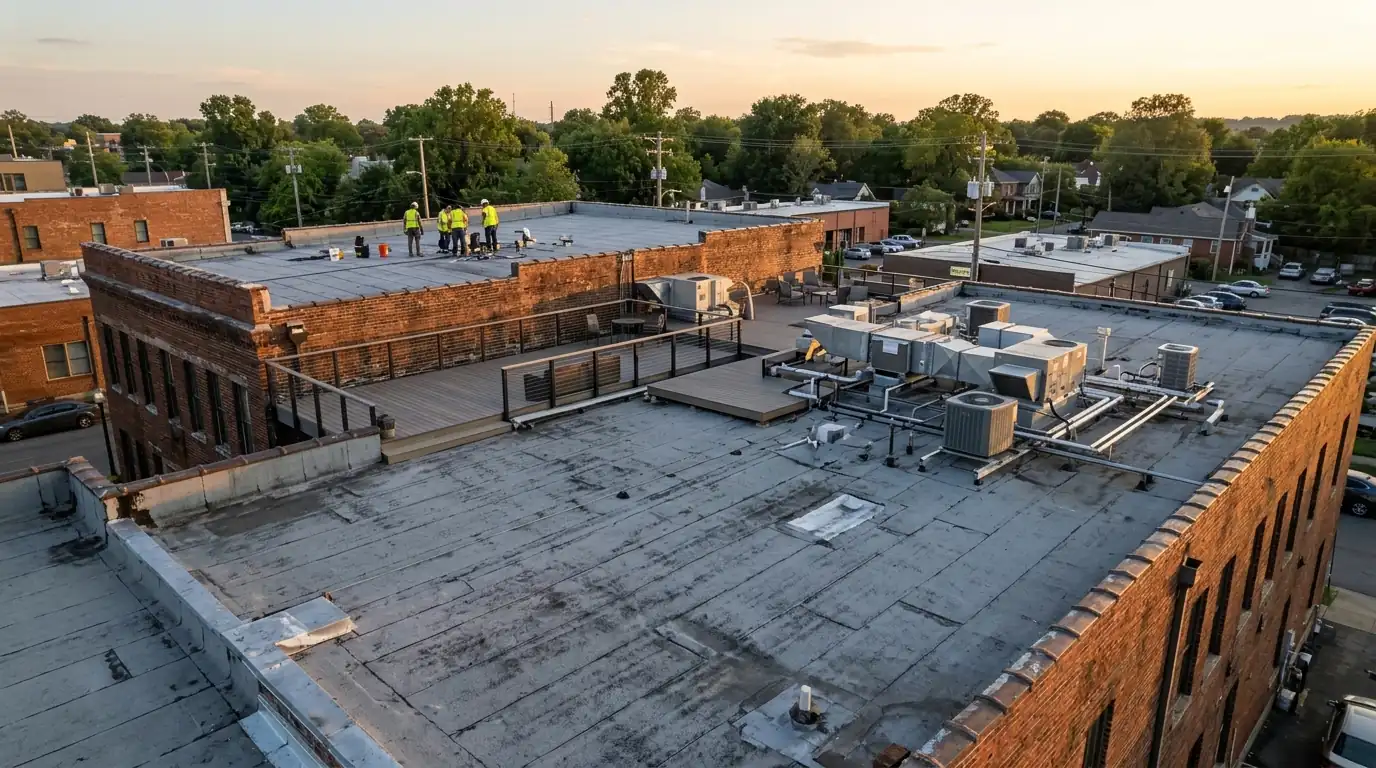
Modified bitumen, often called mod-bit, is an asphalt membrane reinforced with a polyester or fiberglass mat and blended with a polymer. It comes in rolls about three feet wide and is laid in overlapping courses. Most commercial installs use two plies: a base sheet that sits on the insulation or cover board, and a granule-surfaced cap sheet that takes the sun, hail and foot traffic. The granules protect the asphalt and give the roof a gray, sand-textured look.
It earns its place on buildings that see a lot of rooftop activity. A medical office with service techs on the roof every month, a school addition with a mechanical yard, or a mixed-use building in East Nashville with a rooftop deck for tenants all benefit from a membrane that tolerates scuffs. The granule surface shrugs off the abrasion that would wear through a thin single-ply, and repairs are straightforward with the same materials.
The tradeoff is weight and labor. Mod-bit is heavier than TPO or PVC, and installation takes more steps and more hands, which is why we confirm the deck can carry the load before we price it. Details like penetrations and curbs need torch, hot mop or adhesive work, so the crew skills matter. We tell owners plainly when single-ply makes more sense, and we say so when the building suits mod-bit better because of traffic, existing substrate or the way the roof has to be repaired over time.
Surface choice is worth a conversation. A standard gray granule cap is the default, but white-granule and factory-coated caps reflect more heat, and some owners add a field-applied reflective coating after the cap cures. Dark caps run hotter on a July afternoon, which speeds aging of the asphalt and raises cooling load on the floor below. We show the options side by side and tell you what each does to price, so the decision doesn't get made by default.
SBS, APP and self-adhered: three modified bitumen paths
The names are confusing, and the choice affects flexibility, fire risk and who can repair the roof later. Here is how we frame it.
| SBS (cold or hot adhesive) | APP (torch-applied) | Self-adhered | |
|---|---|---|---|
| Modifier | Rubber-like styrene-butadiene-styrene | Plastic-like atactic polypropylene | Usually SBS with a peel-and-stick back |
| Cold-weather flexibility | Stays flexible through a Nashville freeze-thaw | Stiffer in cold, handles heat well | Flexible, but needs warm enough surfaces to stick |
| How it goes on | Cold adhesive, hot asphalt or heat welding at laps | Open-flame torch at every lap and detail | Peel-and-stick over a primed substrate |
| Fire risk during install | Low with cold adhesive, moderate with hot asphalt | Highest, since open flame sits near insulation and wood | Lowest, with no flame or hot kettle |
| Best for | Roofs that move with temperature swings | Large, open roofs with trained torch crews | Occupied buildings and sites where flame isn't allowed |
How we build a two-ply modified bitumen roof
Each layer has a job, and skipping one is how mod-bit gets a bad name.
Survey and core cuts
We read the deck, the old layers and the insulation. Wet or crushed board comes out before anything new is laid.
Deck and insulation
We fasten or adhere polyiso in staggered layers and add a cover board that the base sheet will bond to.
Base sheet
A mechanically fastened or adhered base sheet goes down first, with laps staggered so none line up with the layer above.
Cap sheet application
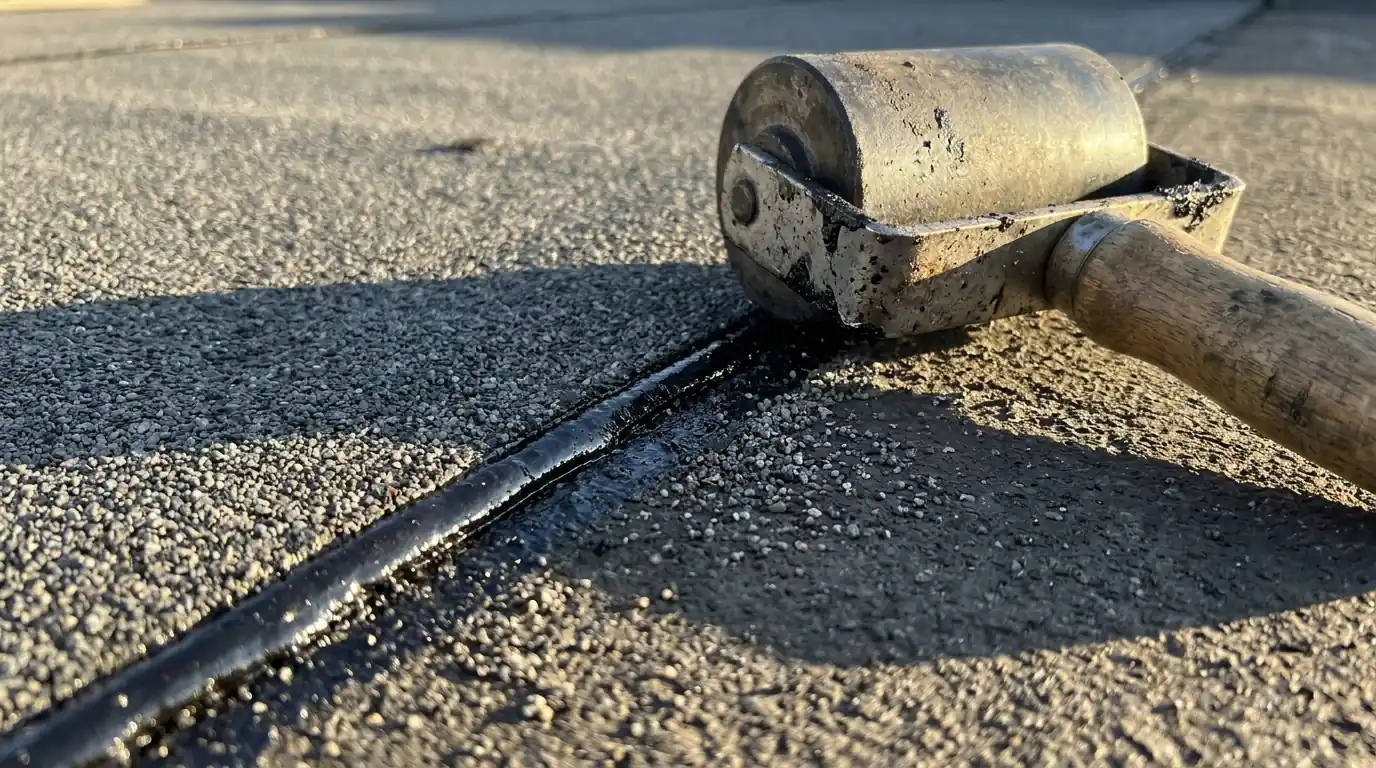
The granule cap goes on by torch, cold adhesive or self-adhesion according to the system. Laps get a visible bleed-out bead.
Flashings and details
Walls, curbs and penetrations get base flashing and a granulated cap flashing. Metal edges are set with a sealed flange, and every corner is built with a reinforcing patch rather than a fold.
Final check and coating if specified
We walk every lap, press back loose edges, and add a reflective coating where cool-roof goals require it. You get photos of laps, drains and flashings before we leave.
Modified bitumen pricing in Middle Tennessee
Ranges assume a sound deck and ordinary access. Site conditions, torch restrictions and tapered insulation change the number, so we quote after a site visit.
| Work | Typical range | What moves it |
|---|---|---|
| Two-ply SBS, cold adhesive, over cover board | $7.40 to $10.90 per sq ft | Common choice for occupied buildings and mixed traffic. |
| Two-ply APP, torch-applied | $6.45 to $9.35 per sq ft | Lower material cost, but torch work needs fire-watch time. |
| Self-adhered cap over existing base | $5.85 to $8.70 per sq ft | Used for recovers when the existing base is dry and sound. |
| Lap, flashing and cap sheet repair | $415 to $1,360 per repair visit | Based on the number of details and cleaning needed. |
What pushes a price up or down:
- Number of plies and whether a granule cap or smooth surface is chosen
- Torch restrictions set by insurers or building owners
- Existing roof layers that must come off before new work
- Wall and curb heights that change how much base flashing is needed
- Reflective coating added after the cap sheet cures
Ranges reflect recent Middle Tennessee work and are not a quote; we price after a site visit. See the full Budget Guide.
How a worn granule cap sheet shows its age
Mod-bit gives plenty of warning before it leaks. These are the signs we look for when we assess an older roof, and most of them show up first in the sunniest, most-walked parts of the roof near the units and the hatch.
Bare spots where granules wore off
Exposed asphalt oxidizes fast in sun and cracks, particularly in traffic lanes.
Granules collecting in gutters or at drains
A pile of gray sand at the scupper means the cap sheet is shedding its protection.
Open laps
Where overlaps pull apart, water gets between plies and can wick sideways.
Splits along insulation joints
A straight crack that follows board seams is thermal movement, and it needs a proper repair, not a smear of mastic. We cut it open, reinforce it with a strip of new membrane, and flash it so it can move without opening again.
Blisters that stay soft
Raised bubbles filled with moisture may need to be cut out and re-laid. A blister that is firm and dry may be left alone and monitored, while one that sags or sloshes is a leak path in waiting.
Ridging above fasteners
Lines running across the roof can mean backed-out fasteners or a poorly fastened base sheet.
Torch or no torch: how we handle fire risk on Nashville buildings
Open-flame torch work is a legitimate method, but it puts fire next to insulation, wood nailers and old roof layers. Insurers on churches, apartment buildings and older brick structures often restrict it. Several Nashville property managers we talk to won't allow it near occupied space, and that is a sensible rule. Where torch work is allowed, we require extinguishers on the roof, a fire watch after the last flame goes out, and a plan for sealing any gaps that let heat sneak into the wall cavity.
Where flame isn't welcome, SBS with cold adhesive, heat-welded laps in a controlled area, or self-adhered sheets take its place. They install a bit slower and cost slightly more in materials, but the risk profile is simpler. If your building is occupied, ask for a no-torch option in writing, with the product named and the method of attachment spelled out. We price it and compare it with the torch alternative so you can decide with real figures rather than a general preference.
Cold weather matters for self-adhered work. Peel-and-stick membranes need a clean, dry, primed surface and warm enough temperatures to grab, so a December job in Middle Tennessee may need heated storage for the rolls and a careful watch on the forecast. Our crews check surface temperature before every shift, and if the substrate is too cold or damp, we hold the install rather than gamble on adhesion. A day lost to weather costs far less than a lap that peels in March.
Questions to settle before you approve a mod-bit bid
A clear answer to each of these prevents change orders later. Property managers who settle these points before the bid comes back usually compare proposals more fairly, because every contractor is pricing the same scope.
- Torch, hot asphalt or cold-applied: what does the insurer allow?
- Is the roof occupied during work, and what hours can noisy tasks run?
- Will the existing roof come off or be recovered, and is the insulation dry?
- How many plies does the bid include and what is the surface?
- Who supplies edge metal and does it meet ANSI/SPRI ES-1?
- How are penetrations and curbs flashed, and what warranty applies, if the system qualifies?
- Will a reflective coating be added, and when?
Hail on a granule roof is easy to miss
After a spring hail event across Rutherford or Williamson County, a mod-bit roof can look fine from the ground. Hail bruises the mat under the granules, and the damage shows up later as cracks or leaks. We check by feel and by core cut, and we photograph any granule loss in a grid. If you plan an insurance claim, call before the next rain so the evidence isn't washed away. Document the date of the storm, the size of the stones if you know it, and any interior stains that showed up afterward.
Need modified bitumen roofing on a Nashville building?
Call (615) 716-3057 any hour. We look at the roof, show you what we found and price the work before anything starts.
Where we do modified bitumen roofing around Nashville
The ZIP codes below cover most of the buildings we work on. Every one links to its local page, and the full locations list has 62 more.
- Nashville 37219
- Downtown Nashville 37219
- East Nashville 37206
- Antioch 37013
- Madison 37115
- Donelson 37214
- Hermitage 37076
- Bellevue 37221
- Green Hills 37215
- Franklin 37064
- Brentwood 37027
- Murfreesboro 37130
- Smyrna 37167
- La Vergne 37086
- Mount Juliet 37122
- Lebanon 37087
- Hendersonville 37075
- Gallatin 37066
- Spring Hill 37174
- Columbia 38401
- Goodlettsville 37072
Work that often goes with modified bitumen roofing
Membranes, coatings and metal we work on every week include Versico, Duro-Last, Elevate and Gaco, plus older systems still in service.
Modified Bitumen Roofing questions from Nashville owners
What's the difference between SBS and APP modified bitumen?
SBS is rubber-modified and stays flexible, which suits Middle Tennessee freeze-thaw. APP is plastic-modified, usually torch-applied, and handles heat well. Both can make a durable roof. We recommend one based on the substrate, building use, and whether open flame is acceptable on your property.
Is torch-down roofing safe on an occupied Nashville building?
Open flame always adds fire risk, so many owners and insurers restrict it. We offer cold-applied and self-adhered modified bitumen as no-flame options. If a torch is used, we plan fire watch and have extinguishers on the roof. We'll explain the tradeoffs before you choose.
How long do granule cap sheets last?
Service life depends on drainage, foot traffic, granule loss and how the laps were made. Cap sheets that shed granules fast or crack along joints are nearing the end. We judge remaining life with a walk-through and core cuts, not a number from a brochure.
Can I put new modified bitumen over my old roof?
Possibly, if the insulation is dry, the deck is sound and codes allow another covering. Building codes limit roofs to two coverings before a tear-off. A moisture scan and core cuts tell us whether a recover is realistic on your building.
Can you fix a leaking modified bitumen roof right now?
Phone (615) 716-3057 any time. We answer 24/7. We find where water is entering, stop it with a temporary repair if conditions allow, and plan a proper lap or flashing fix once the roof is dry enough for adhesive or heat to bond.