Commercial roof inspection in Nashville, TN
You need to know what is under the membrane before you buy the building, renew a lease or sign off on a budget. We walk the roof, cut cores and hand you a report you can act on.
- Photo report with roof plan
- Core cuts where needed
- Answered 24/7

Short answer
A commercial roof inspection is a documented walk of the whole roof, covering membrane, seams, flashings, drains, penetrations and edge metal, with core cuts where moisture is suspected. You get a photo report and a marked-up roof plan listing defects, repair priorities and rough costs. Buyers use it as due diligence before closing on a building.
What a real roof inspection covers
A glance from a ladder is not an inspection. Ours starts with the paperwork, including any roof plans, warranty documents and leak history. Then we walk every square foot of the roof, rooftop and parapet, on foot, and record what we find on a roof plan. We note membrane type, approximate age, attachment method, insulation type where we can verify it and the number of previous repairs. The record also becomes your baseline for every future inspection.
We look at the parts of the roof that fail first. Those are the seams and laps, the base flashings at walls and curbs, pitch pans, drains, scuppers, coping and edge metal. We check for ponding, blisters, splits, punctures from foot traffic, open sealant, loose counterflashing and equipment pad damage. Each finding gets a photo, a location and a priority.
Where the roof shows signs of trapped moisture, such as soft spots, dark staining or a hollow sound under foot, we cut a test core to see what is underneath. Photos go in the report, and the cut is patched the same day. When the building is large or the answers are uncertain, we recommend an infrared survey to map wet areas. The report says plainly which areas we could not reach.
How a Nashville inspection runs, start to report
A typical roof takes a few hours on site, with the written report following once the field notes are complete.
Collect what exists
We ask for roof plans, repair invoices, warranty papers and any leak log. If none exist, we say so in the report and build the record from scratch. Gaps in the record are noted rather than filled with guesses.
Walk the roof perimeter first
The edge metal, coping, parapet walls and drains are checked before the field, since failures there let water in around the whole building. A drain clogged with leaves can hold a foot of water against a parapet.
Walk the field in a grid
We cross the roof in a grid, probing seams, checking fastener patterns and flagging blisters, splits and soft areas on the plan. Footprints and wear paths show where trades walk to equipment and where protection pads belong.
Check penetrations and equipment
Curbs, pipe boots, pitch pans, conduit supports and unit stands get close looks, because most leaks start next to something that comes through the roof. Water often enters a few feet from where it shows up inside.
Cut and patch test cores
At suspect locations we cut a small sample, record the layers and moisture, then patch it with matching membrane and sealant before leaving. Layers, thickness and moisture are recorded the moment the core comes out.
Photograph and mark up the plan
Every defect gets a numbered photo and a number on the roof plan, so your maintenance crew or another contractor can find it again. Numbers match the plan, so no one has to guess which blister is meant.
Deliver the written report
You receive the plan, photos, condition summary, repair priorities and cost ranges for each. We walk you through it by phone at your convenience. Questions after the call are welcome, and the 24/7 line is open.
Situations that call for an inspection
Most owners order an inspection after something goes wrong. These are the moments when doing it sooner pays off.
Before you buy a building
An investor looking at a warehouse near Nashville International Airport needs to know the roof age and remaining life before the inspection period ends. The report also lists what the seller should provide.
After a hail or wind event
Spring storms bruise membranes and pull flashings. A documented inspection helps with an insurance claim and shows what changed. We note dents, creased laps and lifted flashings by roof area.
Before a lease renewal or sale
A tenant or buyer's lender may ask for roof condition. A clear report resolves the question and avoids surprises at closing. We write the condition in plain language for the other side.
When leaks keep coming back
Patching the same ceiling stain three times costs more than finding the source. A full inspection traces the path of water. We also check drain lines and interior stains for the true source.
Before the capital budget is set
A facility manager at a Rutherford County school or church needs numbers by month, not guesses in November. We give year-by-year numbers rather than a single total.
Ahead of a warranty expiry
Records of defects fixed before coverage ends can matter. We help you catch and document items while they still count. Missed items tend to be denied once coverage ends.
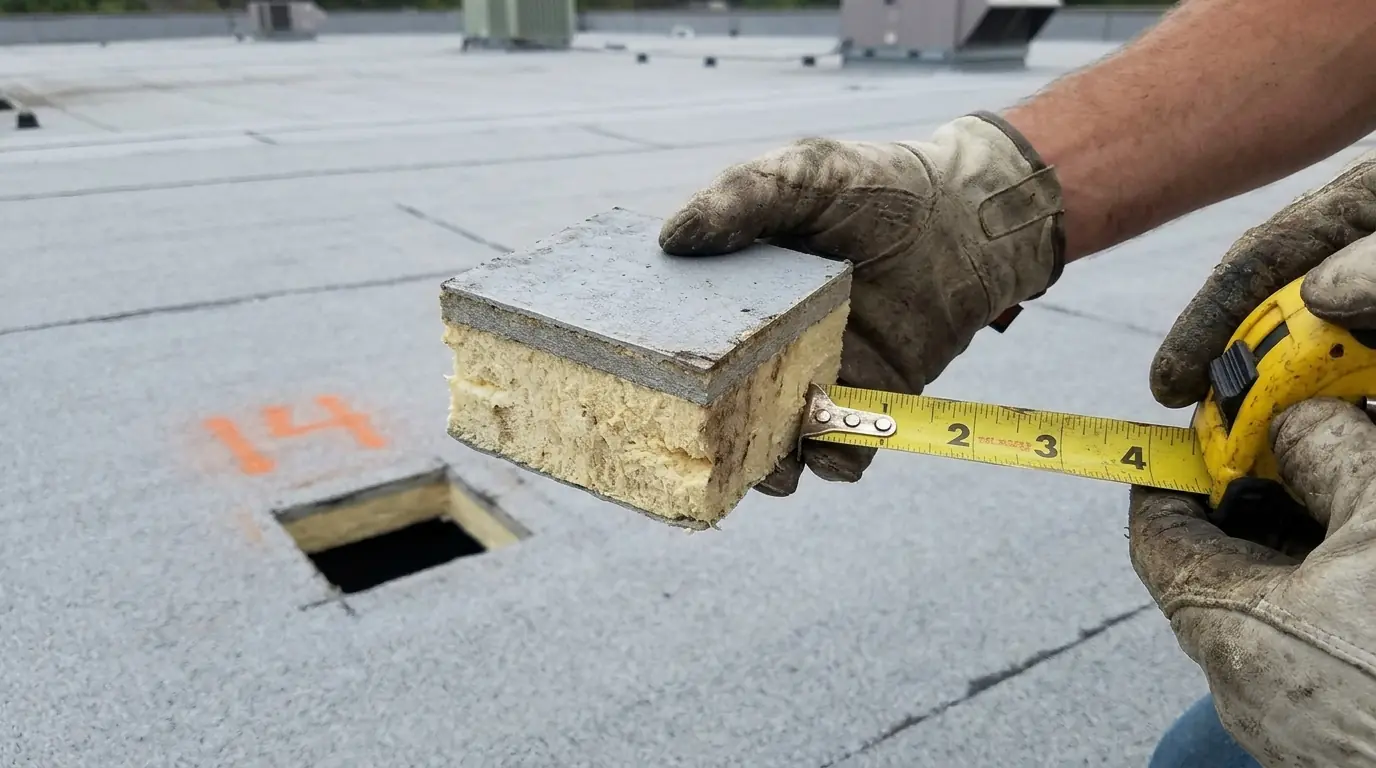
Visual inspection versus inspection with core cuts and scans
The right depth depends on the decision you are making. A buyer's inspection goes deeper than a routine one. We recommend the depth that fits your decision, not the longest report.
| Walk and photo inspection | Inspection with cores and scan | |
|---|---|---|
| What it finds | Visible defects, drainage, flashing and seam condition | Visible defects plus hidden moisture and layer makeup |
| Best for | Routine checks, insurance records, small roofs | Purchase decisions, large roofs, repeated leaks |
| Time on site | Hours for a typical building | Hours plus a night visit if infrared is added |
| Cost level | Lower | Higher, rising with roof size and number of cores |
| Decision it supports | Repair priorities for this year | Repair, restore, recover or replace and the budget year |
Pre-purchase due diligence, from the buyer's side
If you are buying a commercial building, the roof is often the largest single deferred cost behind the walls. A seller's disclosure or broker's summary rarely tells you how much life is left. We inspect for the buyer, with a report written so your lender, co-investor or attorney can read it without a roofing glossary.
The report includes membrane age as best we can verify, condition rating by roof area, repair quantities with cost ranges, and a replacement or restoration budget year. If the roof has a manufacturer warranty, we note whether it can transfer and what records the seller should hand over. Where the facts are not clear, we say so rather than guess.
Timing matters, and it is usually tight. Inspection periods tend to run only a couple of weeks. Due diligence windows are short, so we tell you right away if we can schedule and what the weather might do to the plan. Call the 24/7 line and ask. Cores and infrared work add time, so ask early if you think you will need them. We also tell you which items belong on the repair credit request and which are normal wear that the price already reflects.
What a commercial roof inspection costs
Inspection pricing follows roof size, access and depth. We quote after a call about the building, since some roofs need cores and others do not. A roof with an unusual layout may cost more.
| Work | Typical range | What moves it |
|---|---|---|
| Walk-through inspection with photo report | $0.06 to $0.14 per sq ft | Minimum visit charges apply for small roofs. |
| Core cuts with moisture readings | $185 to $395 per core | Includes patching the cut with matching materials. |
| Roof plan markup with numbered defects | $450 to $1,150 per building | Scaled with roof size and number of roof levels. |
| Pre-purchase report with repair and budget ranges | $1,275 to $3,640 per building | Includes a phone review for you and your lender. |
What pushes a price up or down:
- Total roof area and the number of separate levels
- Access method, such as interior ladder, exterior stair or lift
- Number of cores needed to confirm insulation condition
- Whether an infrared survey is added for wet area mapping
- How quickly the report is needed against a closing deadline
Ranges reflect recent Middle Tennessee work and are not a quote; we price after a site visit. See the full Budget Guide.
What your inspection report should contain
Any roof inspection report, ours or another firm's, should hold at least these items.
- A scaled or marked roof plan showing every defect
- Dated photos for each numbered finding
- Membrane type, attachment method and estimated age
- Core cut results with layer descriptions and moisture notes
- Condition of drains, scuppers, edge metal and coping
- Repair priorities ranked by urgency
- Cost ranges for repairs and for later restoration or replacement
- A statement of what could not be seen or tested
After the 2020 tornado, documentation mattered most
After the March 3, 2020 tornado, owners across North Nashville, Germantown and East Nashville learned how much a pre-event roof record helps. Photos and plans showing condition before the storm made claims clearer and settlements easier to explain. A yearly inspection record does the same job. If you have not documented your roof, an inspection report is the baseline you will wish you had after the next storm. We keep reports on file for you, so you can pull the same photos years later.
Need commercial roof inspection on a Nashville building?
Call (615) 716-3057 any hour. We look at the roof, show you what we found and price the work before anything starts.
Where we do commercial roof inspection around Nashville
The ZIP codes below cover most of the buildings we work on. Every one links to its local page, and the full locations list has 62 more.
- Nashville 37219
- Downtown Nashville 37219
- East Nashville 37206
- Antioch 37013
- Madison 37115
- Donelson 37214
- Hermitage 37076
- Bellevue 37221
- Green Hills 37215
- Franklin 37064
- Brentwood 37027
- Murfreesboro 37130
- Smyrna 37167
- La Vergne 37086
- Mount Juliet 37122
- Lebanon 37087
- Hendersonville 37075
- Gallatin 37066
- Spring Hill 37174
- Columbia 38401
- Goodlettsville 37072
Work that often goes with commercial roof inspection
We install and repair systems from Carlisle SynTec, GAF, Johns Manville and Sika Sarnafil, and we patch whatever is already on your roof.
Commercial Roof Inspection questions from Nashville owners
How long does a commercial roof inspection take in Nashville?
A typical building takes two to five hours on site. Large industrial roofs or buildings with multiple levels take longer. The written report follows once photos and notes are complete, and we give you a timeline when we schedule. Rush reports for closings are possible, so ask when you call.
Do you cut cores during a roof inspection?
When there is reason to suspect moisture, yes. We cut a small test sample, record the layers and moisture, take a photo and patch the cut the same day. We do not cut randomly, since each cut is a repair we must make good.
Can a roof inspection help with a Nashville property purchase?
Yes. A pre-purchase inspection gives you the roof's condition, estimated remaining life and repair or restoration budget before your due diligence window closes. Your lender, co-investor or attorney can use the plan and photos without needing roofing experience to understand it.
How often should a commercial roof be inspected?
At least twice a year, in spring and fall, and after any major storm. Manufacturer warranties often require regular inspections. Many owners add a documented annual inspection with photos to build a record that supports warranty claims and capital planning.
What is the difference between an inspection and a roof condition assessment?
An inspection looks at defects on one roof now. A condition assessment adds remaining life estimates and multi-year budget planning, often across several buildings. Many owners start with an inspection and move to an assessment when they need a capital plan.