What the 48-hour rule actually says
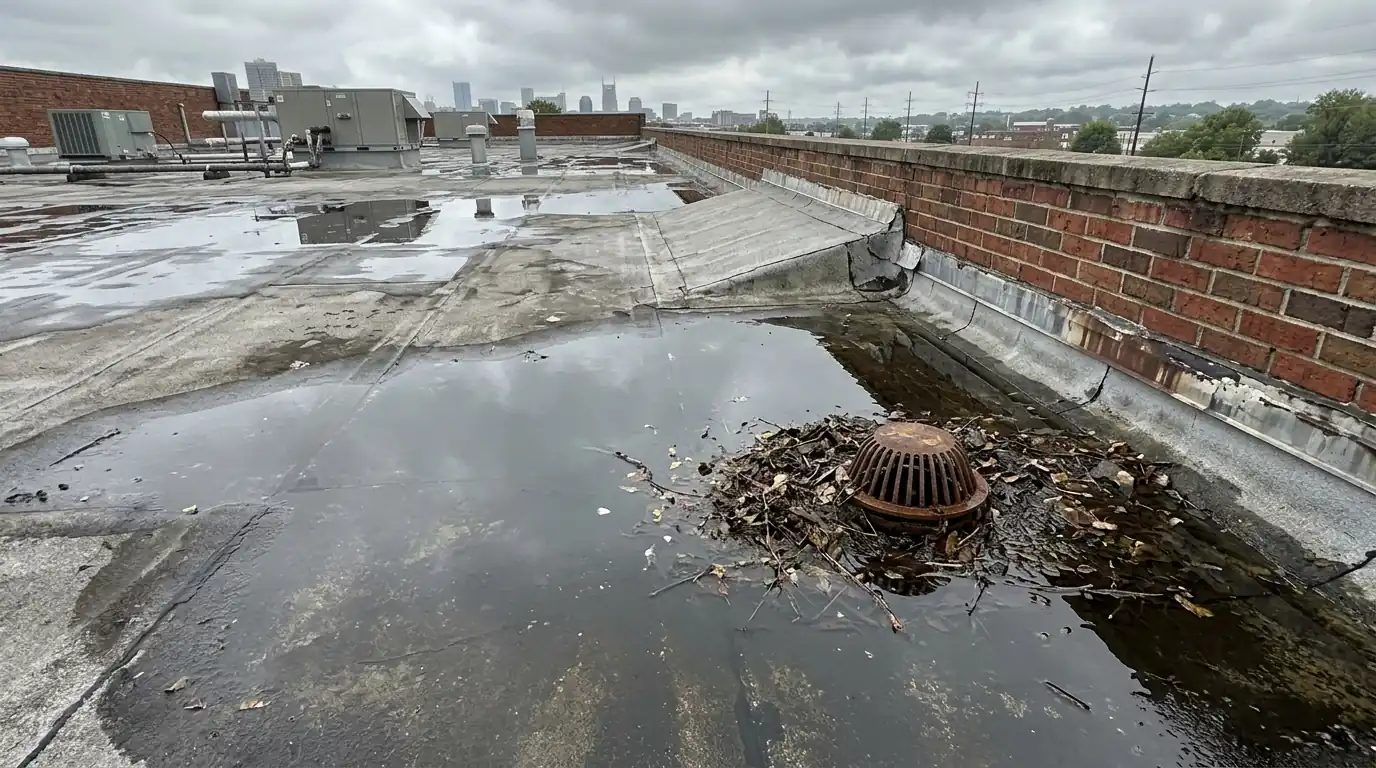
The 48-hour rule is an industry convention: if water is still standing on the roof surface two days after rain stops, with reasonable sun and temperature to dry it, the roof has a ponding problem. A puddle that vanishes by the next afternoon is normal. A puddle that is still there on day three is not, and it deserves an explanation.
The rule matters because many manufacturer warranties treat ponding as a limit. Some exclude damage that ponding causes. Others require corrected slope or drainage before coverage applies at all. Always read the exact warranty language on your own roof, because the wording differs from one manufacturer to another and from one membrane to another.
Low-slope roofs are designed to move water toward drains, not to hold it. Any area that holds water means that the design, the structure or the maintenance has drifted from that goal. The job is to find out which one drifted, because each has a different fix and a different cost. Write down the measured depth and duration of each pond so the conversation with a warranty reviewer has numbers in it.
Weather matters when you judge a pond. After a cold, cloudy week, water can linger for days on a perfectly good roof because nothing is evaporating it. The rule assumes normal drying weather, so record the conditions too. A pond that stays through a warm, breezy week is the one to worry about.
How to spot ponding before it becomes a leak
Check two days after a rain, not the morning after. Look from the roof edge and from the hatch with a dry day behind you.
Stains in a ring
A dried outline of dirt or algae marks where water stood. The ring tells you how deep and how often.
Dirt trapped at low points
Fine silt and debris collect where water slows down and evaporates.
Green or black growth
Algae and mildew thrive on constantly damp membrane, especially in Nashville's humid summers.
Membrane wrinkles or soft spots
Weak spots near ponds can mean wet insulation underneath.
Granule loss
On modified bitumen, bare mat near drains and low areas shows accelerated wear.
Interior ceiling stains
Brown rings on tile below the pond often show up before the roof shows an actual hole.
Why water stops where it does
The most common cause is structural. Steel decking deflects between purlins, and over years of snow, ice and equipment load it settles slightly. A half inch of sag spread across a bay is enough to hold water. Concrete decks can also settle or have low spots from the original pour, particularly near columns and mid-span.
The second cause is drainage. A roof drain with a clogged strainer, a scupper that sits too high, or a drain that was set above the deck line will hold water around it. We often find this on older buildings where roofing layers were added over the years and raised the surface without raising the drain bowl to match.
The third cause is original design. Some roofs were built with a nominal slope that works on paper but does not survive real-world tolerances. Insufficient slope toward drains is a design problem, and only added slope solves it. Cleaning the drains will not help a roof that was flat from day one.
Mechanical equipment can also create ponds. A heavy unit set on a section of roof without extra framing adds load that pushes the deck down over time, and the water collects around the curb. Equipment added years after the building was built is a frequent cause, because nobody checked the original structure before setting it.
Ways to fix it, matched to the cause
A fix that ignores the cause comes back. Match the repair to what we find.
| Best for | Limits | |
|---|---|---|
| Clean and clear drains | Blocked strainers and scuppers | Does nothing for structural sag |
| Lower or add a drain | Drains set too high | Needs plumbing and deck access |
| Tapered insulation | Broad low areas and flat bays | Adds thickness at edges and doors |
| Crickets | Water trapped behind curbs and walls | Only addresses local areas |
| Structural shim or deck repair | Deck deflection | Higher cost, may need an engineer |
| Re-roof with positive slope | End-of-life roofs with many ponds | Largest budget |
Why more sealant is the wrong answer
When a pond leaks, the instinct is to coat it, patch it or smear mastic over the worst spot. That treats the symptom. The membrane under a pond is under constant stress, and a patch laid on a wet, algae-covered surface rarely bonds for long. The leak comes back at the edge of the patch, usually within a season.
Another shortcut is to drill a hole in the parapet or add a scupper without checking the structure. That moves the water, but it can overload an existing downspout or send it onto a sidewalk. Any change to drainage should be checked against the roof plan, the plumbing and the local permit rules for your jurisdiction.
The right answer starts with the survey. Once we know why water stops where it does, the repair can be sized to the cause. Sometimes the whole fix is a single new drain and a cricket. Sometimes it is a re-slope. Either way, the cost is easier to defend when it comes with measurements.
How we investigate a pond
Ponding is rarely just a roofing problem. We look at the whole path water takes.
Document after rain
We walk the roof two days after a storm, photograph standing water and note approximate depth.
Check every drain
Strainers, sumps, outlets and overflow scuppers get opened and tested with water.
Survey the slope
A long level and string lines show where the surface sags relative to the drains.
Scan for moisture
Infrared or capacitance scans reveal whether the pond has already wet the insulation.
Recommend the smallest fix that works
That may be a drain adjustment, a cricket, tapered insulation or in some cases a full re-slope.
What ponding costs if you leave it
Water that stays on a membrane increases leak risk at every seam and flashing it touches. It also adds weight: an inch of water on a roof is roughly five pounds per square foot, and a large pond adds up to tons across a bay. On an older steel deck, that extra load accelerates deflection, and the pond grows deeper each year.
Ponding also breaks the warranty chain. If a leak develops and the manufacturer finds standing water, they may deny the claim. A tapered insulation correction at $4.60 to $7.90 per sq ft in a localized area costs far less than losing coverage on an entire roof. Actual numbers change with the size of the area and access, and we quote after a site visit.
There is a tenant cost as well. Ponds sit over the same ceilings year after year, and a slow leak under a pond ruins tile, stains walls and breeds mold before anyone traces it to the roof. The fix for the cause is almost always cheaper than the repairs that repeat for ten years afterward, and tenants will notice a dry ceiling much sooner than they notice a good drainage detail.
Insurance is another reason to act. A carrier that finds standing water on an inspection may treat it as a maintenance issue, and a claim for a leak under the pond may meet resistance. A documented plan to correct the problem shows you are managing the roof, which helps in that conversation.
A Nashville-specific habit worth adopting
Leaf fall from the mature trees around East Nashville, Sylvan Park and the Belle Meade area fills drains every October and November, right before the wet winter. Schedule a drain clearing in late fall and again after the spring storm season. Photograph the strainers before and after. It takes an hour, costs little and prevents many of the ponds we are called to investigate.