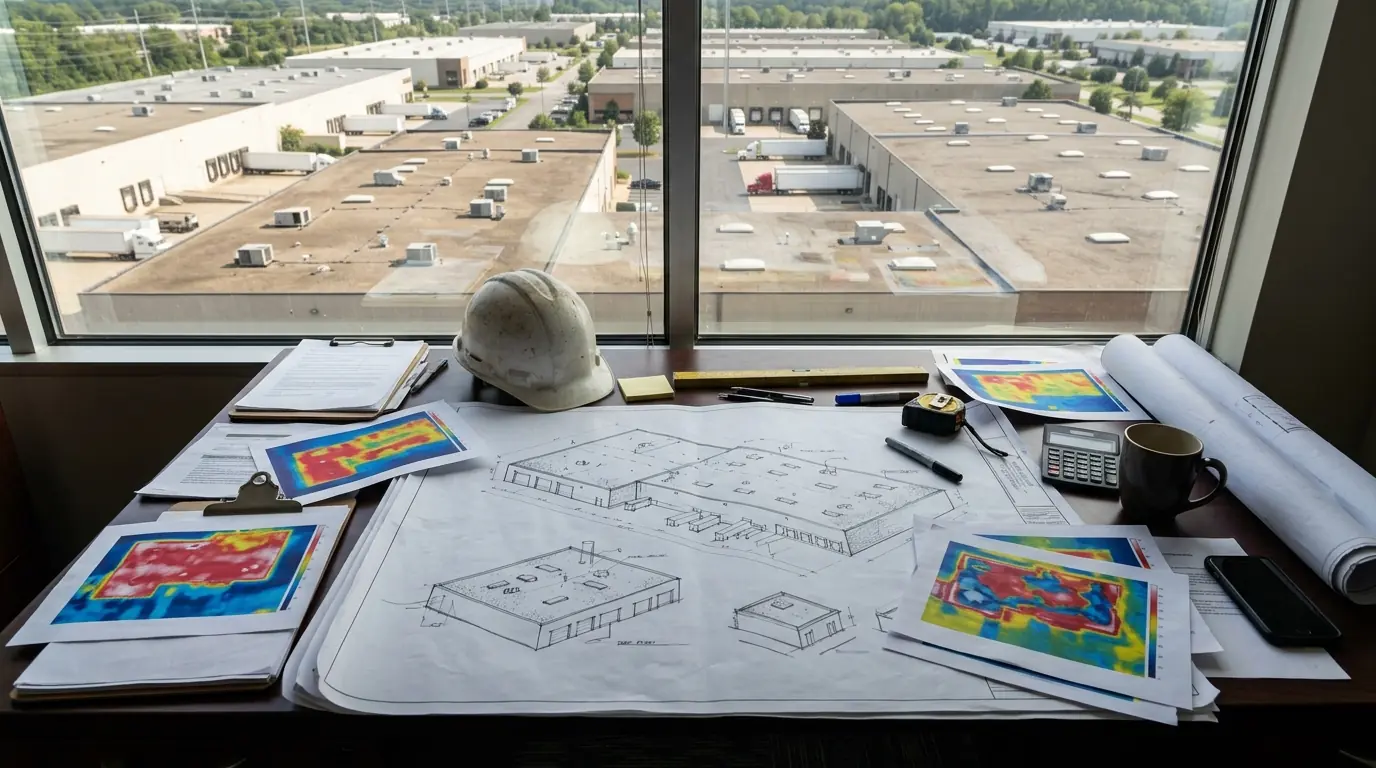
Why roofs break budgets
Roof replacement is a large, lumpy expense. It rarely fits neatly into an annual operating budget, which is why many owners treat it as a surprise. A roof that is fifteen years old seems fine until it starts leaking, and then it needs to be replaced next quarter, with whatever cash happens to be on hand.
A capital plan fixes that by spreading the cost across years and putting the work in order of urgency. It also gives your board, lender or investors a document to point to when they ask why you need money for a roof that looks fine from the parking lot, and it turns an emergency into an agenda item.
The plan does not need to be fancy. A spreadsheet with one row per roof section, a condition rating, an expected action and a range of cost is enough to start. What matters is that it exists, that someone owns it and that it is revisited every year. Version the file each year so you can see how condition ratings and cost ranges have changed over time.
Owners of several buildings gain the most. Portfolios built in the same decade tend to age together, and without a plan the roofs reach the end of their lives in the same two or three years. A plan lets you replace the worst roof first and keep the rest on schedule instead of reacting to whichever one leaks next, which is almost never the cheapest one to fix.
Lenders and buyers now ask for roof information in due diligence. A building with a documented plan and recent surveys reads as lower risk than one with an unknown roof, and that can affect refinancing terms and sale price. The plan is useful long before the first dollar is spent.
Build the plan in six moves
This works for a single building and for a portfolio of warehouses, apartments or churches.
List every roof section
Split by system, age and height. A building with two roof types has two rows.
Collect what exists
Gather install dates, warranties, past repair invoices, inspection reports and photos.
Assess condition
A walk, a moisture scan and a few cores give each section a rating you can trust.
Assign an action and a year
Choose maintain, repair, coat, recover or replace, and place it where condition and budget meet.
Price each action as a range
Use ranges, not single numbers, and update them annually.
Add a contingency line
Reserve funds for storm damage and for surprises found during tear-off.
Planning ranges by action
These are general planning numbers for typical low-slope commercial roofs in Middle Tennessee. Actual cost depends on size, access, deck repair, insulation and system choice, and we quote after a site visit. Factors that move the numbers include roof size, since small roofs cost more per square foot; access, including crane needs, tall parapets and tight sites; wet insulation and deck repair found during tear-off; tapered insulation for drainage corrections; number of penetrations, curbs and rooftop units; warranty level and manufacturer requirements.
| Action | Planning range | What to know |
|---|---|---|
| Annual inspection and minor repairs | $0.09 to $0.27 per sq ft per year | Drain cleaning, sealant touch-ups and a written report. |
| Silicone or acrylic coating on a sound roof | $1.85 to $3.60 per sq ft | Needs dry insulation and a clean, repaired surface. |
| Recover with new single-ply | $5.40 to $9.15 per sq ft | Only over one layer with dry insulation and a solid deck. |
| Full replacement, single-ply | $8.25 to $14.70 per sq ft | Includes tear-off, insulation and flashing; tapered insulation adds more. |
| Standing seam metal retrofit | $11.60 to $19.40 per sq ft | Higher first cost with a longer service life. |
Sorting roofs by priority
Not every roof needs money this year. A simple tiering keeps attention where it counts.
| Condition | Typical plan | |
|---|---|---|
| Tier 1, urgent | Active leaks, wet insulation, failing seams | Replace or major repair in year one or two |
| Tier 2, watch | Aging, repeated repairs, ponding | Scan, coat or recover in years two to five |
| Tier 3, sound | Dry, tight, under half of expected life | Inspect yearly and maintain |
| Tier 4, new | Recently installed with a warranty | Document, protect and inspect |
Timing the spend
Spreading replacements across several years avoids the cliff where five roofs all hit end of life together. If you own twelve buildings built in the same decade, resist the urge to wait. Replace one or two each year, starting with the worst, and let maintenance carry the rest while the budget absorbs the cost steadily.
Coating and recover extend life at lower cost, but only when the roof qualifies. Put those actions in the plan where the data supports them, not as a hopeful alternative to replacement. If a moisture survey shows widespread wet insulation, the plan should say replace, and the number should reflect that honestly.
Pick construction seasons strategically. Contractors book up in late spring and early fall. Ordering in winter for spring work can improve scheduling and give you time to plan tenant notices, permits and any shutdowns of mechanical systems. Delivery times for some insulation and membrane products can stretch when demand rises after storms.
Insurance can change the timeline. A hail or wind claim may pay for part of a replacement you had planned for later, which moves that roof up the list and releases money for another building. Review the plan after every claim and move items accordingly so the money lands where it does the most good.
What to do with maintenance dollars
Maintenance is the cheapest line in the plan and the one most often cut. A yearly inspection with drain cleaning and minor repairs costs a small fraction of replacement, and it routinely delivers several extra years of life. Treat it as part of the capital strategy, not as an operating expense that can be trimmed when the budget tightens.
Use the inspection reports to feed the plan. Each visit should update the condition rating, flag any section that has moved from watch to urgent and list the repairs completed. When two consecutive reports show the same problem getting worse, move the replacement year forward before a leak forces it. Share the changes with the board each time they happen.
Keep repair spending visible. If a roof absorbs several thousand dollars of repairs every year, that cost belongs in the replacement decision. At some point the repeated patching costs more than the depreciation on a new system, and the plan should show where that point is. Total the invoices by roof section every year and keep that number next to the replacement estimate.
Do not forget small capital items that protect the large ones. Walk pads, new drain strainers, an overflow scupper and raised curb flashing are modest purchases that extend the life of the membrane around them. Put them in the first two years of the plan, where they pay back the quickest.
What the plan should show your board
A short, clear package gets approvals faster than a binder of photographs.
- One summary table with every roof, age, condition and recommended year
- Cost ranges and total per year across the ten-year horizon
- Photographs and moisture scan maps for the top three priorities
- Warranty status and expiration for each roof
- A contingency line for storms and hidden damage
- The consequences of delay, such as interior damage and tenant loss
- Notes on lease provisions, since some tenants share roof costs
- A one-line note on what happens if the work slips a year, in dollars and in disruption
Update it after every storm
A plan written in a calm year becomes wrong after the next hailstorm. Middle Tennessee has seen the March 2020 and December 2023 tornadoes, plus regular spring hail. After any major event, re-inspect the roofs and adjust the plan. Document what changed and why. If insurance covers part of the work, the plan shows which items the claim addressed and which remain on the schedule. Keep the plan short enough that your board will actually read it.