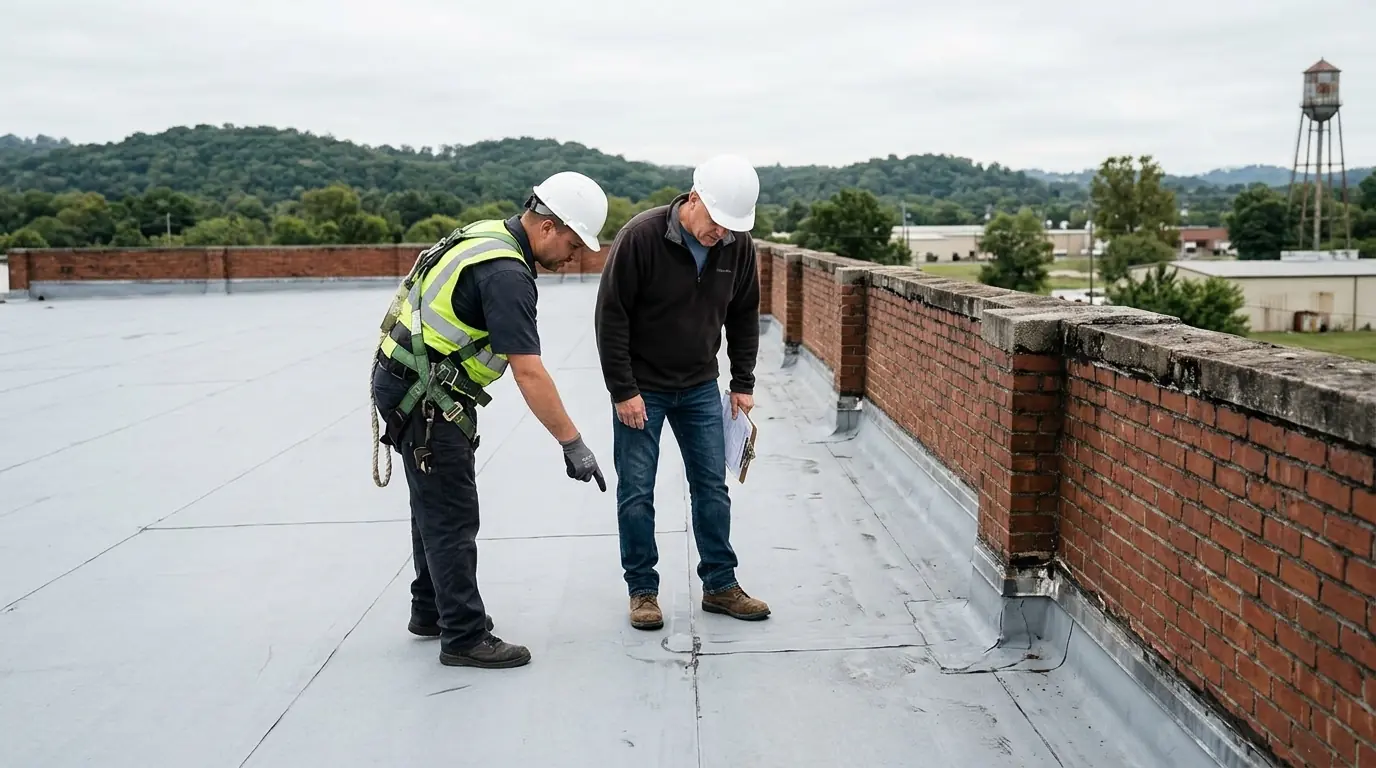
Why the roof deserves its own line in due diligence
Buyers inspect the HVAC, the parking lot, the electrical room and the title. The roof often gets a quick look from a ladder, or a photo from a drone. Yet on a flat-roofed warehouse or a strip center, the roof can be the biggest single capital item you inherit, and it is the one most likely to be misjudged.
A membrane can look clean and flat from the parking lot while the insulation under it is saturated. A building can show no stains inside because the leaks run along a steel deck to a column before they drip. Surface appearance and actual condition are different things, and sellers know it.
The aim is not to scare you off a building. It is to turn the roof from an unknown into a number. Once you know how many years are left and what the next roof costs, you can decide whether the price is fair, ask for a credit or walk away with a clear reason.
Do the work early. Inspection periods are short, scheduling a moisture survey takes days, and the seller's records may take longer to collect than you expect. If you wait for the last week, you will be negotiating from a weaker position with half the facts.
What to ask the seller for, in writing
Put these in your document request list on day one of the inspection period. Silence on any item is also information.
- The year each roof section was installed and by whom, plus any invoices or permits
- The roof system on each section: TPO, PVC, EPDM, modified bitumen, built-up, metal or shingle
- How many layers sit on the deck, and whether any recover was done
- The original warranty document, its type and length, and the current status
- Every leak complaint, repair invoice and insurance claim for the last several years
- Any past moisture survey, core report, engineer report or infrared scan
- Records of maintenance visits, drain cleaning and penetration work by other trades
- Lease clauses that assign roof repair or replacement costs to tenants
Age and layers: what the paperwork can and cannot tell you
Age is a starting point, not a verdict. A thermoplastic roof installed fourteen years ago and maintained every year can outlast one installed nine years ago and ignored. Still, age tells you where the roof sits in a typical life range, and that frames how much of the purchase price you are really spending on the roof.
Layers matter more than most buyers expect. Building codes limit a roof to two coverings before a full tear-off is required. If the building already has a base roof and one recover, your next roof means removing both, which costs more and changes the budget. A core cut answers the question in minutes and costs little compared with a surprise at replacement.
Be cautious with seller statements like 'it was redone a few years ago.' That can mean a full replacement, a recover over the old roof or a coating on a tired membrane. They have very different lives and very different warranty rules. Ask for the invoice, the permit and the warranty paperwork behind the statement.
Does the warranty actually transfer?
A warranty is worth something to you only if it passes to a new owner. Many manufacturer warranties can be transferred once, sometimes with a notice window and a fee, sometimes with a new inspection. Others end at sale. Read the document itself rather than the summary the broker provides.
Check what the warranty covers. A no dollar limit warranty from the membrane manufacturer is different from a short workmanship guarantee by the installer, and both are different from an expired paper that the seller still shows. Ask for the effective date, the term, the exclusions and whether past repairs by other contractors may have voided it.
If the warranty does transfer, confirm the process in writing and put the deadline on your calendar. If it does not, treat the roof as uncovered and price accordingly. Either way, the warranty should be part of the conversation about remaining life, not a bullet on a marketing flyer.
Leak history clues sellers do not volunteer
Walk the building with these in mind during the property tour, then compare what you see with the records.
Fresh ceiling tile in a few bays
New tiles in a row can mean recent leaks that were hidden for the showing.
Patch work around drains and curbs
A cluster of black mastic or sealant at penetrations signals repeated chasing of the same problem.
Stained decking from underneath
Rust bloom and dark streaks on steel deck show years of moisture, even if the roof is dry now.
Ponding stains on the membrane
Dirt rings and algae tell you where water sits for days after rain.
Buckets or plastic in storage areas
A tenant who has given up on repairs often leaves evidence behind a shelf.
Odd smells in closed rooms
Musty odors near exterior walls can point to wet insulation or wall flashing failures.
Getting your own data during the inspection period
A seller's file is one side of the story. This is how we gather the other side on a building you may buy.
Walk the whole roof
We photograph seams, flashings, drains, penetrations and prior repairs, and mark every area of concern.
Scan for moisture
A night infrared scan, or a capacitance meter walked in a grid, maps the wet insulation under the membrane.
Cut and verify cores
A few cores confirm layer count, insulation type and thickness, and deck condition, and we patch each one the same day.
Estimate remaining life
We combine membrane condition, moisture findings and repair history into a range of years left.
Price the next roof
You receive a range for repair, coating, recover or replacement so the number goes into your model.
Remaining life and the budget you carry after closing
Remaining life is the number that turns roof findings into money. A roof with six good years left costs you roughly one sixth of its replacement price per year of ownership, and a roof with two years left costs you three times that. Put the range into your hold-period model, not a flat reserve line.
Include tenants in the picture. Some leases let you pass roof repairs through as common area charges, and others make the landlord pay for structure and roof. Read those clauses before closing, because they decide whether the next roof comes out of your pocket or is shared.
Finally, ask what the seller's price assumed. If the listing was priced as though the roof were new, show the survey and ask for an adjustment. If it was priced for a tired roof, you may have room to accept it and plan the work. Either way, bring the data to the first conversation, not the last.
Lenders and buyers often model roof spending as a vague reserve. If a survey shows five to seven years left on a forty thousand square foot roof, that is a known future bill, and you can discount the offer or ask for a seller credit that fits it. Build the replacement year into your cash flow now, and keep the survey with the closing file. It will help when you refinance, sell or talk to a tenant about shared roof costs.
Putting the roof into the deal
Once you have the data, there are a few common ways to reflect it in the purchase. The ranges below are general planning figures that change with site conditions, and we quote after a site visit.
| Finding | Typical response | Rough cost to plan for |
|---|---|---|
| Dry insulation, membrane near end of life | Price a coating or recover into your first five years | $1.85 to $3.60 per sq ft coated or $5.40 to $9.15 recovered |
| Localized wet areas near drains | Ask for seller repair or a credit before closing | Often a modest lump sum after a cut-and-patch scope |
| Widespread wet insulation or two layers | Negotiate replacement cost into the price | $8.25 to $14.70 per sq ft for a typical replacement |
| Failing deck or structural concern | Bring in an engineer and reconsider the deal | Varies widely with the extent of repair |