Why a calendar works better than a reminder
Most roof problems arrive on a schedule. Hail and wind come in spring, heat builds in summer, leaves clog drains in fall and freeze-thaw cracks things in winter. A property manager who ties roof checks to those seasons catches issues early without needing to remember a vague yearly task that nobody owns.
You do not need to be on the roof yourself for most of this. Some items can be checked from the ground, from the hatch or from an interior walk. Anything that needs walking the membrane should be done by a trained person with the right fall protection, not by whoever happens to be available on a Friday.
Keep a binder or shared folder with dated photos. When the roof ages and you plan a capital request, that record is the best evidence you will have, and it supports warranty and insurance conversations too. Photos from the same spots each season make slow changes easy to see, such as a seam that opens a little more every year or a stain that creeps across a ceiling tile.
Assign each seasonal check to a named person and put it on the maintenance calendar the same way you schedule fire extinguisher tags or elevator inspections. A check that belongs to everyone belongs to nobody. Put the contractor's number on the same calendar entry so a problem can be reported on the spot, whatever the hour.
Match the checks to the weather you actually get. Middle Tennessee can deliver a warm spell in January and a cold snap in April, so treat the season dates as guides. If a major storm passes through in a quiet month, run the spring checks then, rather than waiting for the calendar to catch up.
Add a tenant notice to the fall and spring visits. A short message that tells tenants a crew will be on the roof, and who to call if they notice a leak, turns tenants into extra eyes. Leaks often get reported late because nobody knew who to tell. Both belong on the same calendar. It takes a few minutes and avoids confusion later.
Spring: after the hail and wind season
Middle Tennessee gets severe weather from March through June. Check once the worst of it has passed, and again after any named storm.
- Look for dents on rooftop units, vents and flashing, which often signal hail size
- Check seams and flashings for lifting, especially on exposed corners and edges
- Walk the perimeter for loose coping, gravel stop and edge metal
- Inspect skylights, hatches and domes for cracks or shifted gaskets
- Test drains and scuppers with a hose to confirm they flow
- Scan interior ceilings for new stains, especially under drains and penetrations
- Photograph each roof section from the same spot you used last year, to make changes easy to compare
Summer: heat, humidity and rooftop traffic
Summer is when service crews are busiest on roofs and when heat stresses membranes the most.
- Walk the paths to rooftop units and look for scuffing, tears and cut marks
- Inspect walk pads, and replace any that are cracked or missing
- Check sealant at pipe boots, pitch pans and curbs, where heat dries it out
- Look for blisters, wrinkles or soft spots in the membrane
- Watch for ponding after afternoon thunderstorms and note how long it lasts
- Confirm no new cables, pipes or conduits have been added without flashing
- Check that rooftop access hatches and ladders are locked and in good repair
Fall: leaves, drains and a quick prep for winter
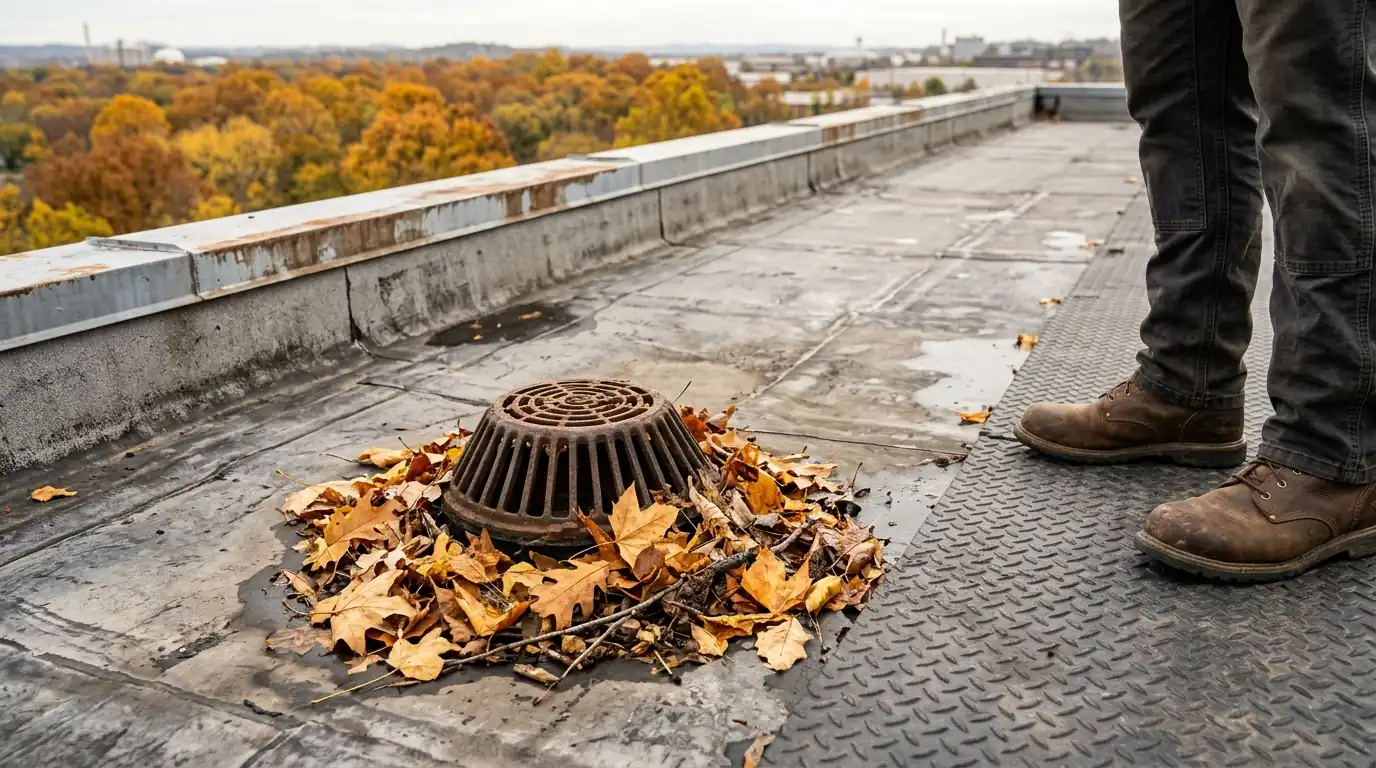
October and November are drain season. Leaves from the tree-lined streets around East Nashville, Belle Meade and Sylvan Park blow onto flat roofs and plug strainers. A blocked drain turns a modest storm into a pond and a pond into a leak. Clear every drain, scupper and gutter, and photograph them before and after.
Check gutters and downspouts on any building with edge drainage. Verify that downspouts discharge away from the foundation and that boots at ground level are intact. A roof that drains well but dumps onto a loading dock or a sidewalk still creates a problem, and the water will turn to ice in January. Photograph the discharge point as well.
Walk the roof for loose debris, abandoned materials and tools left behind by trades. Anything loose can puncture a membrane, and wind will carry lightweight items off the edge onto parking areas below. Remove unused cable, old filters and leftover pieces of flashing before the cold season starts. Leave the roof tidy when the season ends.
If you have a tree near the building that drops leaves, ask whether it can be trimmed back from the roof edge. Branches that overhang the membrane scrape it in wind and drop debris into drains all season. Trimming is a small job that prevents repeat clogs, and many property managers add it to the fall list.
Winter: freeze-thaw and what it exposes
Nashville winters swing above and below freezing, and that cycling opens up weak points in seams and flashings.
- Look for ice buildup around drains and scuppers, which can back water up under flashing
- Check that downspouts and interior leaders are not frozen shut
- Inspect flashings and sealants for cracks after a cold snap
- Note interior condensation or frost, which can point to insulation or air barrier gaps
- Do not chip ice off the membrane, because tools can cut it
- Record any drip or stain with the date, location and weather
- Check for gaps at roof edges, where cold air can enter and condensation can form
Records that make the checklist pay off
A checklist that lives in someone's head disappears when that person changes jobs. Write the results down. A single page per visit is enough: date, who walked the roof, what was found, photographs taken and what was done. Store the pages with the warranty and the original roof drawings. Digital photos with the date in the file name work fine.
Over a few years the file shows patterns that no single visit can. You may notice that one drain clogs every autumn, that one corner shows new ponding after each spring or that one tenant's equipment keeps leaving marks. Patterns point to fixes, and fixes are cheaper than repeated repairs. Share the file with your roofer ahead of each visit so they arrive with context.
When the day comes to ask for a replacement budget, a binder of dated photographs makes the case for you. Boards and lenders respond to evidence that you managed the asset, and insurers look more kindly on a roof with a documented maintenance history. Keep the file in a place any successor can find without a hunt through old messages.
When to stop checking and call
A checklist helps you notice problems. Some findings need a roofer promptly.
Active water inside
Dripping, ceiling tile sag or wet insulation means the roof is open right now.
Torn or lifted membrane
Wind-lifted sheets can peel more with the next gust.
Standing water over two days
Ponding past the 48-hour rule needs a plan.
Missing coping or edge metal
Loose metal can become a falling hazard.
Repeated stains in one spot
A leak that returns is not a stain issue, it is a failed detail.
Two scheduled inspections and one on demand
A practical rhythm is one inspection in late spring after the storm season, one in late fall after leaves, and a third inspection any time a major hail, wind or tornado event passes through. Keep notes on who was on the roof, what they saw and what they did. Our crew will walk your roof on any of those dates. Call (615) 716-3057 and we will set a time. The line is open 24/7. Print this page and tape it in the maintenance office.